The Sky Is No Longer Neutral: Australia Wants the Power to Kill Drones at Home
For most of the drone era, governments worried about where drones were allowed to fly.
Australia is preparing for a much harder question:
When should authorities be allowed to destroy one?
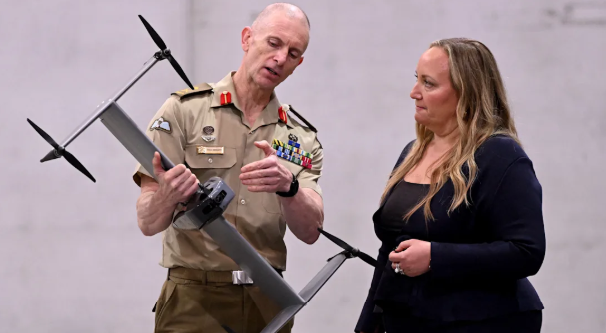
The Australian government is working on legislation intended to strengthen Defence's powers to detect, disable or destroy drones suspected of threatening Australian Defence Force assets and establishments. The push follows unidentified drone incursions at RAAF Base Williamtown near Newcastle, home to much of Australia's F-35A fighter fleet.
That is more than another aviation regulation.
It represents a shift in how governments are beginning to think about the sky above their own territory.
A cheap unmanned aircraft is no longer necessarily a toy, camera or nuisance.
It can be a security problem.
Australia's Home Affairs Department says drones can be misused to interfere with critical infrastructure, disrupt essential services, conduct unlawful surveillance, deliver contraband or enter restricted areas. It warns that greater affordability and capability are changing the security risks associated with drones.
The economics behind that transformation are uncomfortable.
You no longer necessarily need a sophisticated aircraft to create an aviation-security problem. Increasingly capable unmanned systems have become accessible enough that governments must contemplate defending some of their most valuable facilities against machines radically cheaper than the assets beneath them.
Australia has already had the warning.
According to the Australian Financial Review, unidentified drones breached RAAF Base Williamtown in July and August. Defence Industry Minister Pat Conroy said the government needed to move faster, while Chief of the Defence Force Admiral Mark Hammond has pushed for legal reform amid growing risks around military and civilian airports.
Now Canberra is responding.
The hardware push is substantial. Australia's LAND 156 program is valued at A$1.3 billion and sits within a planned A$7 billion decade-long investment in counter-drone capabilities under Defence's Integrated Investment Program. Conroy said counter-drone defences were already being fielded, with military bases and deployed forces among the priorities.
But buying counter-drone technology creates an awkward reality:
Having the ability to stop a drone and having the legal authority to stop it are two different things.
Australia is attempting to close that gap.
The government's existing drone-security work already contemplates detection, information sharing and access to interdiction capabilities. Australian police can also access certain counter-drone equipment under an exemption relating to remotely piloted aircraft disruption.
The latest reported legislative push takes the debate into even more consequential territory.
And military facilities are not the only concern.
Conroy specifically identified prisons, airports and critical infrastructure as areas where counter-drone capabilities could be relevant, while highlighting the Brisbane Olympics as an obvious use case for strengthened protection.
That creates a much bigger challenge than simply purchasing drone jammers or interceptors.
At a military installation, the threat calculation may appear relatively straightforward.
Above an airport, stadium or densely populated event, everything becomes more complicated. Identification matters. Proportionality matters. The consequences of disabling an aircraft matter.
Industry itself has urged caution. The Australian Association for Uncrewed Systems has argued that security rules should distinguish malicious misuse from negligent operations and legitimate commercial or recreational flights, while remaining risk-based and proportionate.
That is precisely why Australia's emerging debate matters internationally.
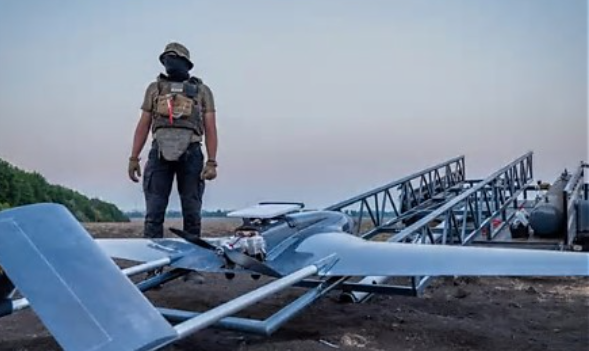
Ukraine has demonstrated what drones can become in war.
Australia is confronting the next question:
What happens when governments have to defend against them in peacetime?
The drone revolution was initially about giving more people access to the sky.
The counter-drone revolution will inevitably be about deciding who has the authority to remove them from it.
And once governments start preparing to destroy unidentified aircraft above bases, airports, infrastructure and major events, the age of treating every small drone as harmless recreational technology is effectively over.
The sky has acquired a new security layer.
And Australia is preparing to police it.