From the Analog Soldier to the Digital Warrior / by Diego Bavio
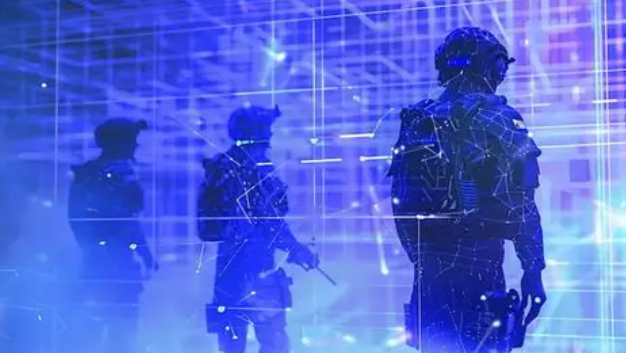
Since the beginning of time, armies have trained soldiers for a battlefield where physical strength, ruggedness, and endurance were the main competitive advantages. The ideal combatant could march for days, carry tens of kilograms of equipment, navigate hostile terrain, and withstand extreme conditions. He was, essentially, an analog soldier.
That combatant will remain indispensable. But he will no longer be sufficient.
The technological revolution transforming modern warfare is not replacing the soldier. It is profoundly transforming the human capabilities that generate military advantage. While much of the debate remains focused on drones, artificial intelligence, or autonomous systems, the most important change is taking place elsewhere: in the profile of the men and women who will have to employ these technologies.
The real revolution is not in the machines. It is in people.
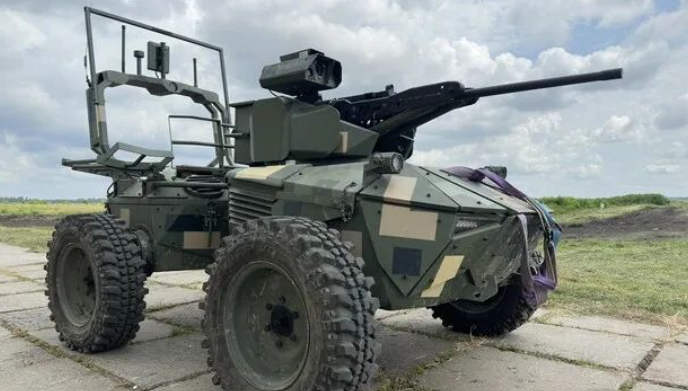
The war in Ukraine has shown that a small team equipped with commercial drones, data links, and loitering munitions can destroy armored vehicles that for decades represented the symbol of ground power. Yet behind every drone there is not a machine making decisions. There is still a combatant who observes, interprets, sets priorities, coordinates fires, and adapts tactics within minutes.
Technology did not eliminate the combatant.
It made him more decisive.
From Muscle to Information
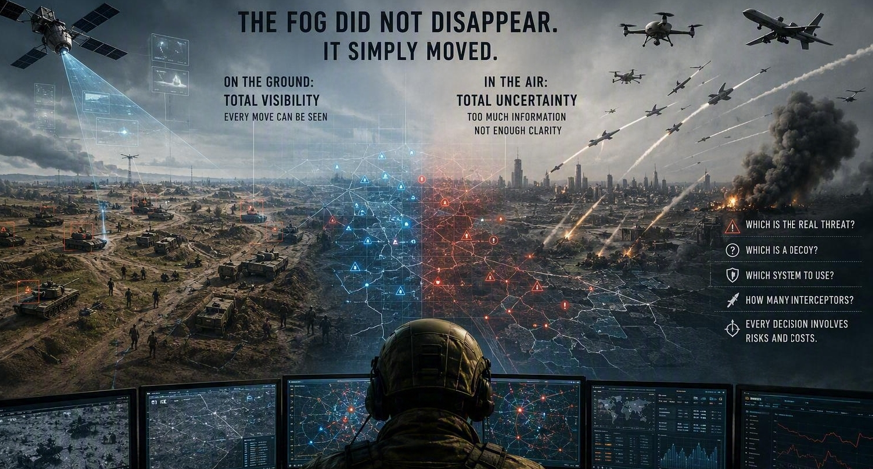
During the 20th century, the success of a unit depended largely on its ability to move, endure, and sustain combat. In the 21st century, the ability to process information and turn it into decisions faster than the adversary is beginning to carry increasing weight.
The new combatant must be able to integrate thermal imagery, real-time video, digital mapping, artificial intelligence, and distributed communications without losing tactical situational awareness.
The most important weapon will not always be the rifle, but the ability to transform information into decisions before the adversary does.
This forces us to rethink even the criteria used to select and train military personnel.
In recent years, the emergence of a generation accustomed to growing up surrounded by screens, video games, and digital interfaces has often been viewed with concern. Paradoxically, some of the capabilities associated with that digital culture may now become operational advantages on an increasingly digital battlefield.
Not because playing video games turns someone into a soldier.
But because warfare is beginning to demand cognitive skills that part of this generation developed from an early age: an intuitive understanding of digital interfaces, the ability to process multiple sources of information simultaneously, coordination in virtual environments, and continuous adaptation to new technologies.
We are talking about interpreting the battlefield through digital interfaces.
The Return of Volume
Warfare has changed. And it has done so at a speed that requires doctrine, training, and personnel selection to be reviewed much faster than in previous military revolutions.
But the scale of the transformation has changed too.
Capabilities that were once concentrated within small communities of specialists can now be distributed among a much larger number of combatants.
And the return of volume creates a new problem: who operates all those systems?
Technological democratization makes it possible to produce and deploy drones, sensors, and platforms on a scale that, only a few years ago, was largely reserved for far more expensive and specialized capabilities.
But multiplying systems does not mean that we can proportionally multiply the number of people capable of and willing to employ them.
The next bottleneck may lie precisely in human resources.
The question will no longer be simply how many systems we can produce, but how many we can actually turn into combat power.
From Tank Hunter to System Hunter
The appearance of armored vehicles drove the development of units and capabilities designed to locate and destroy armored targets.
From the Bazooka to modern anti-tank missiles, the function remained essentially the same: find a high-value target and destroy it.
What is changing in Ukraine is not necessarily the mission, but the chain through which that mission is accomplished.
Today, an armored vehicle can be located by a small commercial drone, tracked for kilometers, identified through sensors, and eventually destroyed by a loitering munition, an FPV, or another low-cost system.
The drone may have radically changed the way the target is acquired and attacked, but it has not created a new military requirement. It has expanded the tools available to accomplish a mission that armies already understood.
The mistake appears when we confuse the tool with the function.
For decades, the tank hunter needed a specialized weapon to accomplish that mission. The system hunter can now draw on a combination of sensors, drones, artificial intelligence, data links, and different means of attack.
Technology does not eliminate the function. It changes the way it is performed and allows capabilities that were once concentrated among specialists to be distributed more widely.
Perhaps doctrinal evolution should therefore not focus on creating a new specialty of “drone operators,” but on strengthening existing specialties whose mission has always been to locate and destroy high-value targets.
The drone ceases to be the center of the debate. It becomes simply another tool of the combatant.
More Than Operators: Connected Combatants
But the mass adoption of these capabilities creates another challenge: how do we incorporate them without turning the combatant into a mere operator?
Technological democratization does not turn the combatant into a remote pilot. It provides him with tools that were once reserved for specialists and allows him to incorporate them into his function within the combat system.
Armed forces do not need thousands of people who can simply fly a quadcopter. They need combatants capable of integrating information, interpreting the battlefield, coordinating fires, and making real-time decisions using drones, sensors, data links, and other digital tools.
The difference may seem subtle. In reality, it is doctrinal.
This is not about training drone operators. It is about training digital warriors.
The digital warrior is not a specialist in a particular platform. He is a combatant capable of incorporating digital capabilities into his function and employing them as part of a much broader network of sensors, information, fires, and decision-making.
But this transformation contains a paradox. If technology allows capabilities to be distributed on an ever-larger scale, it also increases the demand for people capable of using them.
We can manufacture thousands of drones much faster than we can train and sustain the combatants who must employ them.
Technological volume may ultimately find its limit in human volume.
The Human Remains at the Center
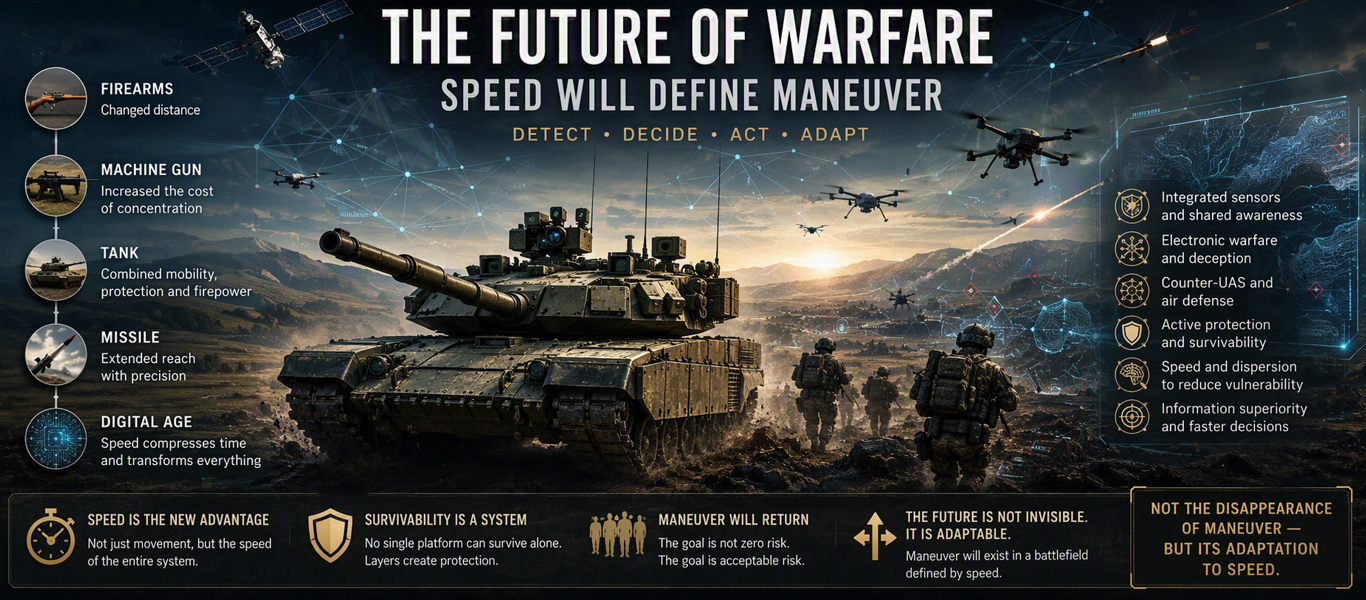
Military revolutions rarely eliminate previous capabilities entirely. They normally integrate and transform them.
The soldier who can endure long marches will remain indispensable. The scout will remain necessary. The electronic warfare specialist will remain essential. Command will retain its place.
But all of them will have to operate in an environment where information has become a weapon as decisive as fire.
The challenge will be to ensure that technology multiplies the combatant’s capabilities without turning him into a mere machine operator.
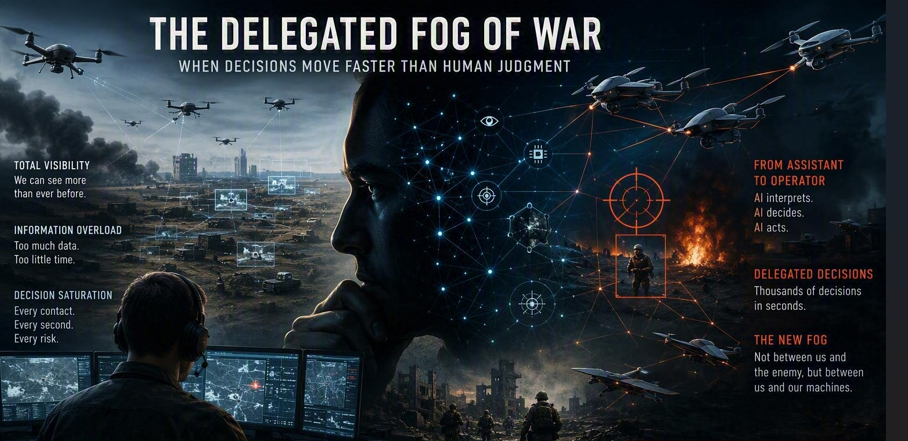
Because the greater the volume of drones, sensors, and systems available, the greater the temptation to place more information, more decisions, and more responsibilities on the individual.
And every combatant has a limit.
Autonomy therefore appears as a logical response to that limit. If we can produce thousands of systems but cannot increase the number of men and women who must operate them at the same rate, the apparent solution is to make machines do more on their own.
But that solution opens an even deeper question:
How far should we augment the combatant, and at what point do we begin to replace him?
Perhaps, years from now, we will remember that the true revolution of drones never consisted simply of machines learning to fight.
It consisted of human beings learning to extend their senses, intelligence, and decision-making capacity beyond the limits of their own bodies.
That may only be the beginning. The next step will be to understand how this extension transforms the combatant, how far his capabilities can be augmented, and which human limits technology should not attempt to eliminate.
Wars will continue to be fought by people. What is changing is everything those people can see, understand, and do.
The analog soldier does not disappear. He evolves. And that evolution has a name: the digital warrior.