Ukraine Is Looking Up: How Balloons Could Become a New Layer of Drone Warfare
At first glance, it sounds almost absurd.
Balloons. Over one of the world's most technologically intense battlefields.
In a war increasingly defined by drones, electronic warfare and long-range precision systems, a technology associated with the earliest era of aviation is reappearing in a remarkably modern role.
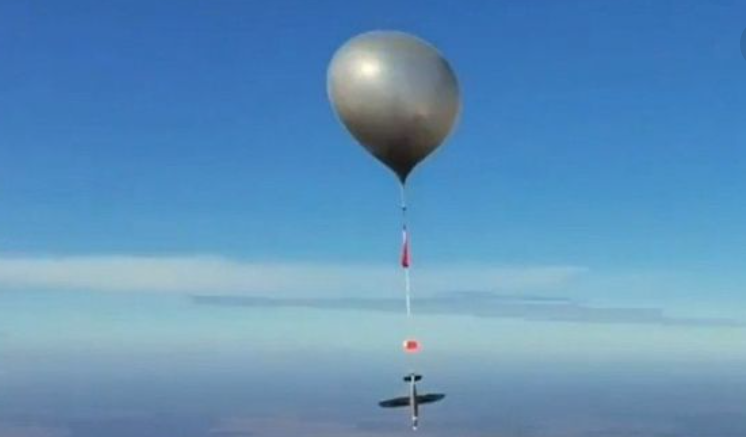
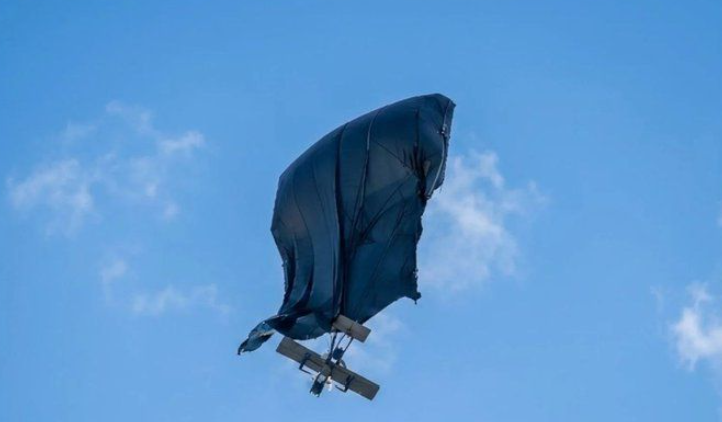
On October 21, Russian war blogger Andrey Medvedev warned that Ukrainian forces were reportedly using balloons to carry drones into Russian-held territory, including toward occupied Crimea. In a translation published by ChrisO_wiki, Medvedev also claimed balloons could function as airborne communications repeaters.
If even part of that picture is accurate, the intriguing story isn't the balloon.
It's what the balloon could allow everything beneath it to do.
A conventional drone has a fundamental constraint: energy. Every kilometre flown toward a target consumes power or fuel that cannot subsequently be used for maneuvering or returning.
A carrier platform introduces a different concept. Instead of making the drone perform the entire journey under its own propulsion, another platform carries it for part of the route.
The balloon is slow. It is technologically unglamorous. And that can be precisely the point.
In Medvedev's account, operators use weather information and air currents to guide balloon movement, while altitude is adjusted using ballast. He claimed the balloons could reach altitudes of up to 8,000 metres and were difficult for radar to detect effectively. These are claims from the Russian war blogger and should not be treated as independently verified Ukrainian technical specifications.
Russian forces can intercept them. Medvedev himself said balloons had been shot down, including through the use of FPV air-defence systems.
But carrying drones may represent only one side of the concept.
The other is communications.
Medvedev speculated that some balloons could function as signal repeaters and suggested Ukraine might be experimenting with connectivity, including Starlink-related links, deeper inside Russian territory.
That claim demands caution.
Evidence that a balloon can carry communications equipment is not evidence that Ukraine has established a functioning, interconnected long-range control network across Russia. Nor do the available reports independently establish Medvedev's claims about operating altitude, Starlink connectivity or the scale at which such systems are supposedly being deployed.
That distinction is crucial.
War produces speculation almost as quickly as it produces technological innovation.
Yet even without accepting the most ambitious claims, the underlying concept deserves attention.
The drone revolution has already demonstrated that military innovation does not always mean building something faster, bigger or dramatically more expensive.
Sometimes innovation means combining technologies that already exist in an unexpected way.
A cheap drone can threaten equipment worth millions.
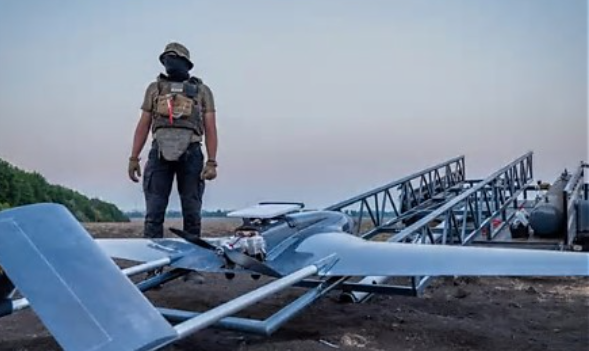
A commercially derived aircraft can become a reconnaissance platform.
And now a balloon, one of aviation's oldest ideas, can potentially become part of a distinctly twenty-first-century unmanned ecosystem.
That creates an uncomfortable challenge for defenders.
Modern air-defence architectures were designed around categories: aircraft, helicopters, cruise missiles, ballistic missiles and, increasingly, drones.
But warfare keeps producing things that sit awkwardly between those categories.
What happens when the carrier is almost primitive but the payload is digital?
What happens when altitude matters more than speed?
And what happens when the most valuable thing carried by an airborne platform isn't an explosive at all, but communications equipment?
This is why the balloon story matters even if some of the dramatic claims surrounding it ultimately prove exaggerated.
Ukraine's battlefield innovation has repeatedly been shaped by necessity: find something available, combine it with something new, test it under combat conditions and force the opponent to react.
The result is an extraordinary inversion of military history.
The future of drone warfare might occasionally arrive aboard technology invented centuries ago.
And sometimes the strangest weapon on a modern battlefield isn't the one that flies fastest.
It is the one nobody thought they would need to look for.