The Swarm Is the Weapon: Why the Future of Naval Warfare Isn't a Ship
For more than a century, naval power has been measured in steel.
Bigger ships. Bigger guns. Bigger fleets.
But a demonstration off the German coast may have revealed something far more significant than another defense technology milestone. It may have offered a glimpse into the future of warfare itself, one where the decisive asset is no longer a vessel, submarine, aircraft, or missile.
Instead, the weapon is the network.
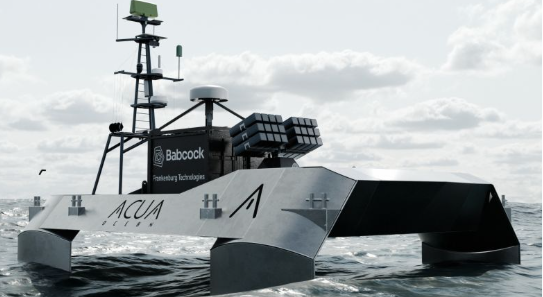
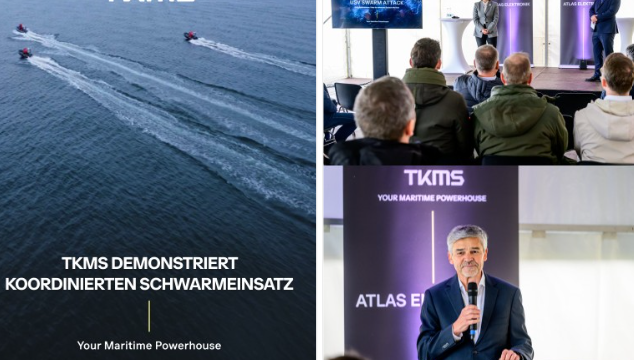
In Nienhagen, TKMS and ATLAS ELEKTRONIK demonstrated a coordinated swarm operation involving multiple unmanned surface vehicles (USVs) conducting a simulated attack against a surface target. While the scenario itself attracted attention, the deeper story lies beneath the surface: autonomous systems operating collectively, making decisions and executing missions as a connected force rather than as individual platforms.
That distinction changes everything.
From Platforms to Ecosystems
Military procurement has traditionally focused on platforms.
A destroyer is evaluated individually. A submarine is assessed on its own capabilities. Aircraft are compared based on performance specifications.
But autonomy is rewriting those rules.
The question is no longer how capable a single platform is.
The new question is how effectively dozens, hundreds, or even thousands of autonomous assets can operate together.
This shift mirrors transformations that have already occurred in other industries. The most powerful technology companies are not defined by individual products but by ecosystems. The same principle is now reaching defense.
A swarm of inexpensive autonomous systems connected through intelligent command architectures can create operational effects that were previously only achievable with vastly more expensive platforms.
In this environment, mass suddenly matters again.
Not mass measured in tons.
Mass measured in nodes.
The Rise of Multi-Domain Warfare
Perhaps the most important aspect of the TKMS vision is not the USV itself.
It is the ambition to connect systems operating under water, on the surface, in the air, and on land into one coordinated digital battlespace.
This represents the practical implementation of multi-domain operations, a concept that has become central to NATO and allied military thinking.
Imagine a future scenario:
An underwater autonomous vehicle identifies a threat.
An aerial drone verifies the target.
A surface vessel relays the data.
An autonomous interceptor executes the mission.
Human operators maintain oversight while machines coordinate the execution.
The result is an integrated kill chain measured not in minutes but in seconds.
Who owns the sensor becomes less important than who owns the network.
Speed Becomes the Ultimate Advantage
Military history repeatedly shows that information superiority often decides conflicts before firepower does.
Autonomous systems amplify that principle dramatically.
Machines can detect, classify, prioritize, and distribute information faster than human operators.
A naval commander facing a coordinated swarm does not simply confront multiple targets.
The commander faces multiple intelligent systems simultaneously sharing information, adapting to battlefield conditions, and executing collective behavior.
The challenge is no longer defeating one system.
The challenge is disrupting an ecosystem.
As artificial intelligence matures, this dynamic will only intensify.
The side capable of processing information and coordinating autonomous assets at scale gains a decisive operational advantage.
Beyond the Demonstration
It would be easy to view the Nienhagen event as a technology showcase.
That would be a mistake.
The demonstration reflects a broader trend reshaping defense industries worldwide. Across Europe, the United States, and Asia, investment is increasingly flowing toward autonomous systems, AI-enabled command architectures, unmanned vehicles, and resilient networking technologies.
The strategic race is no longer about building the most advanced individual platform.
It is about creating the most intelligent connected force.
The implications extend well beyond maritime operations.
The same technological principles governing autonomous naval swarms will influence air defense, border security, critical infrastructure protection, logistics, and future expeditionary operations.
The battlefield of tomorrow may contain fewer iconic platforms and many more autonomous participants.
In that world, victory will not necessarily belong to the strongest ship.
It may belong to the smartest network.