The New German Arms Race: When Startups Replace the Peace Dividend
For decades, Germany's startup ecosystem chased familiar dreams.
The next fintech.
The next e-commerce champion.
The next climate-tech disruptor.
The next software unicorn.
In 2026, those dreams haven't disappeared.
But they have been joined by something few would have predicted a decade ago:
Defense technology.
The latest startup rankings reveal a profound shift in Germany's innovation landscape. Among the country's most promising young companies, defense startups no longer occupy a controversial niche. They stand at the very center of the technology economy.
And that tells us something much larger than who happens to be hiring the most engineers.
It tells us that Germany's startup scene has entered the era of geopolitical reality.
The End of the Peace Dividend
For over thirty years, much of Europe operated under assumptions that now feel increasingly outdated.
Security could be outsourced.
Globalization would reduce conflict.
Technology innovation would primarily serve commercial markets.
Those assumptions shaped investment priorities and entrepreneurial ambition.
Then the world changed.
Geopolitical competition returned.
Supply chains became strategic assets.
Artificial intelligence evolved into a national security capability.
Autonomous systems moved from laboratories to battlefields.
Suddenly, defense was no longer a legacy industry.
It became a frontier technology sector.
The ranking reflects that transformation.
Companies developing AI-powered defense systems, autonomous drones, and next-generation surveillance technologies are attracting engineers, investors, and talent at a pace few conventional sectors can match.
The Rise of the Defense Unicorn
Perhaps the most striking signal is not that defense companies appear in the rankings.
It is where they appear.
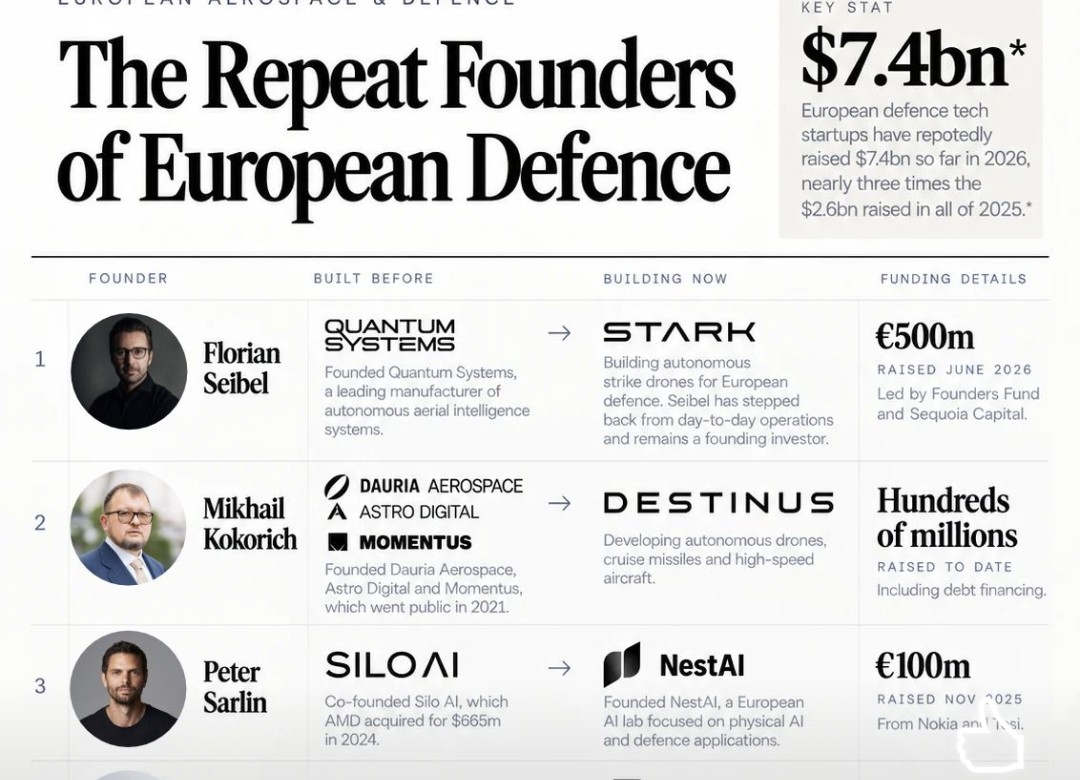
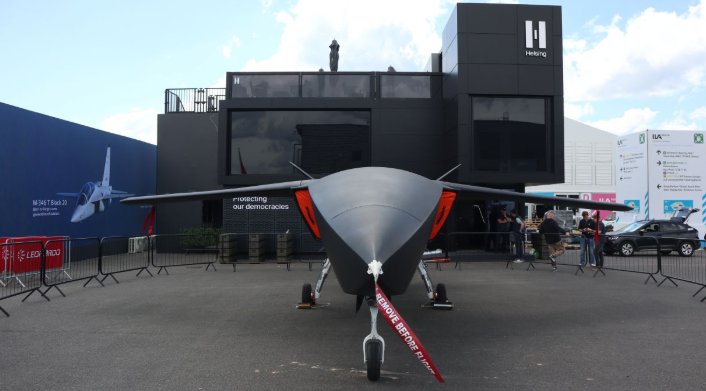
Helsing ranks among Germany's most attractive startups, building AI-driven defense technologies and military software systems.
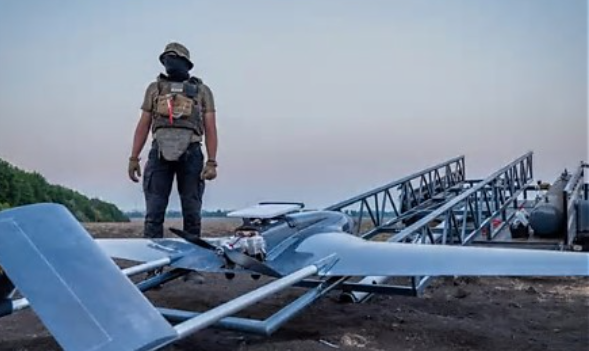
STARK, focused on autonomous drones and unmanned defense capabilities, has rapidly become one of the country's most closely watched technology ventures.
Meanwhile, SWARM Biotactics is pushing the boundaries of biohybrid robotics, combining biological systems, sensors, and robotics for intelligence and surveillance applications.
Just a few years ago, such companies would have struggled to attract mainstream attention.
Today, they sit near the top of Germany's innovation hierarchy.
The message from investors, engineers, and talent markets is becoming increasingly clear:
Defense technology is becoming a growth industry.
AI Is the Common Denominator
Behind nearly every major startup success story in 2026 is a familiar theme.
Artificial intelligence.
Whether it is enterprise automation, industrial monitoring, defense systems, logistics optimization, or knowledge management, AI has become the foundational technology layer across sectors.
What is particularly noteworthy is how defense startups have embraced AI as a force multiplier.
Modern military advantage is no longer defined only by hardware.
Increasingly, it is defined by software.
Autonomous drones.
Computer vision.
Target recognition.
Sensor fusion.
Decision-support systems.
Battlefield awareness.
All rely on algorithms as much as engineering.
The distinction between software startup and defense company is becoming increasingly blurred.
Berlin Builds Software. Munich Builds Strategic Technologies.
The regional distribution is equally revealing.
Berlin remains Germany's dominant startup hub, producing digital platforms, AI applications, enterprise software, and financial technologies.
But Munich is emerging as something different.
A center for deep-tech innovation.
Defense technologies.
Space systems.
Quantum computing.
Advanced sensors.
Research-intensive engineering.
This concentration is not accidental.
Many of these sectors require close connections to scientific institutions, industrial expertise, and long-term capital.
The result is an innovation geography increasingly aligned with Europe's strategic priorities.
A New Definition of Innovation
What makes this moment remarkable is not merely the success of defense startups.
It is the normalization of their success.
Engineers who once dreamed of building consumer apps are now working on autonomous systems.
Venture capital that once prioritized social networks or delivery platforms increasingly flows toward AI, security, robotics, and resilience.
The German startup ecosystem is adapting to a world defined by technological competition and geopolitical uncertainty.
That shift carries enormous implications.
The startups dominating today's rankings may shape not only future markets but future security architectures.
A decade ago, Germany's startup story was about digitizing business.
Today's story is different.
It is about building strategic capability.
And if the latest rankings are any indication, the future of German innovation may be measured not only in software downloads or valuation multiples, but in technological sovereignty itself.