The Navy’s Mine War Is Going Robotic — AEVEX Just Won $41.6M to Push It Forward
Maritime mines are cheap, dangerous and notoriously expensive to clear.
That imbalance has challenged navies for decades. A low-cost mine can threaten a major warship, close a shipping lane or slow an entire naval operation. Clearing that threat often requires specialized ships, trained crews and time-consuming procedures.
AEVEX is betting that autonomy can change that equation.
The company has been awarded two contracts totaling $41.6 million by the Portfolio Acquisition Executive for Robotic and Autonomous Systems for the production, fielding and operation of its SightGlass and Fisher mine countermeasures systems.
The goal is straightforward: give the U.S. Navy more remote and autonomous options to find, identify and neutralize maritime mines without putting sailors directly in danger.
SightGlass is the mine-hunting side of the system.
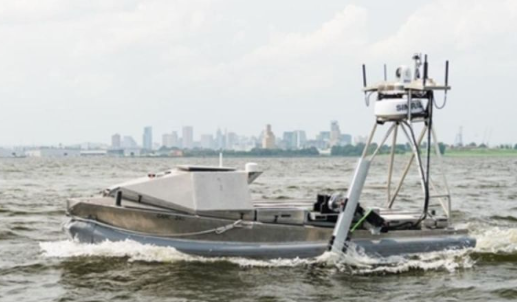
It is a modular payload designed for AEVEX’s Global Autonomous Reconnaissance Craft, Lynx and next-generation Chaser small unmanned surface vessels. Its job is to search for mines, identify them and classify what has been found.
That first step is critical.
Before a mine can be neutralized, the system has to know where it is and what type of threat it represents. By moving that task onto unmanned platforms, the Navy can push sensors into dangerous waters while keeping crews farther away from the threat.
Fisher handles the next part.
Developed in partnership with VideoRay, Fisher is designed to reacquire and neutralize mines after they have already been detected. It is intended for the Lynx and Chaser platforms and works as the action element in the mine-clearance chain.
The two systems are designed to complement each other.
A Lynx equipped with SightGlass can search, locate and classify a mine. Another platform equipped with Fisher can then move in, reacquire the target and neutralize it. This creates a distributed mine-countermeasure approach built around unmanned systems instead of traditional crewed minehunting vessels.
That is where the concept becomes especially interesting.
Mine warfare has always been a difficult problem because the cost exchange strongly favors the mine layer. Mines can be deployed cheaply and in large numbers, while clearing them can require expensive ships, helicopters, divers or specialized equipment.
Autonomous systems change the risk and cost structure.
They can operate remotely, reduce exposure for sailors and potentially be deployed in larger numbers. Because SightGlass and Fisher are modular payloads, they can also be integrated across multiple unmanned surface platforms rather than being tied to one specialized vessel.
This gives the Navy more flexibility.
The contracts also expand mine-countermeasure capability across the existing GARC fleet and AEVEX’s newer Lynx and Chaser sUSVs. That means the program is not starting from zero. The systems are being integrated into an existing robotic and autonomous ecosystem.
SightGlass has already gone through testing and evaluation with the Navy and the Defense Innovation Unit. According to AEVEX, its unmanned surface vessels are now becoming an important part of the Navy’s robotic and autonomous mine-countermeasure capabilities.
The bigger shift is operational.
Instead of sending a crewed ship into a minefield, future naval forces could send a network of small autonomous vessels ahead. One platform searches. Another confirms the target. A third neutralizes it. The process becomes distributed, modular and less dependent on exposing high-value platforms or sailors.
This does not make mine warfare easy.
Autonomy still has to work in difficult sea conditions, sensors must separate real threats from false contacts and unmanned platforms need reliable communications and navigation. Minefields are also designed specifically to create uncertainty and delay.
But the direction is clear.
The U.S. Navy is moving toward a model where mine countermeasures are increasingly robotic, distributed and autonomous.
AEVEX’s $41.6 million award shows that this shift is moving beyond experimentation.
The future minehunter may not be a ship full of sailors.
It may be a network of small unmanned vessels working together to find the mine first — and destroy it before a human ever has to get close.