The End of the Sealed Missile: Why Anduril's Barracuda Could Change Weapons the Way Smartphones Changed Computing
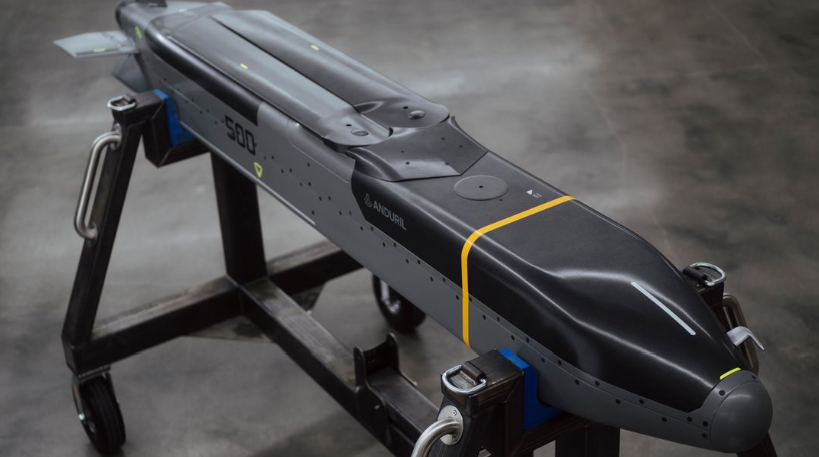
For decades, military weapons have been built according to a simple principle:
Design. Build. Field. Replace.
Once a missile entered service, its architecture was largely frozen. Upgrades were costly. Modifications required extensive redesign. Introducing a new sensor, navigation system, software package, or electronic component often meant starting over.
The result was predictable.
Technology advanced faster than weapons could evolve.
By the time many systems reached the battlefield, parts of their design were already becoming outdated.
Now that model may be about to change.
And if it does, historians could look back on Anduril's Barracuda missile family as one of the first large-scale examples of a fundamentally different philosophy of warfare.
Not because Barracuda is the fastest missile.
Not because it carries the largest payload.
Not because it introduces revolutionary propulsion.
But because it treats a weapon like a platform rather than a product.
That distinction sounds technical.
In reality, it could reshape the defense industry.
The significance of Barracuda's recent verification by the U.S. Air Force Research Laboratory lies in one acronym:
WOSA.
Weapon Open Systems Architecture.
At first glance, open architecture sounds like an engineering discussion.
It is actually about strategic speed.
Historically, weapons have functioned as closed ecosystems. The original manufacturer controlled interfaces, upgrades, and integration processes. This made modernization slow and expensive.
WOSA turns that logic upside down.
Instead of redesigning an entire missile whenever new technology emerges, different subsystems can be independently upgraded through common interfaces.
Seekers.
Software.
Navigation systems.
Payloads.
Mission autonomy.
Communications.
All become modular components rather than permanently fixed features.
Think less "missile."
Think more "smartphone."
Your phone remains physically the same device while applications, operating systems, sensors, and capabilities continuously evolve.
Barracuda suggests weapons may be moving in the same direction.
That matters because modern warfare evolves at unprecedented speed.
The war in Ukraine has repeatedly demonstrated that technological advantages can disappear within months.
A drone gains an advantage.
Electronic warfare learns to counter it.
Software adapts.
Countermeasures appear.
The cycle repeats.
Under these conditions, military advantage increasingly depends not on possessing a weapon, but on how quickly that weapon can evolve.
This is where Barracuda's significance extends beyond Anduril itself.
The company's successful verification through AFRL's independent MOATEL testing process is important because it moves open architecture from a concept into production reality.
Defense industry conferences have spent years discussing modularity.
Barracuda is among the first examples of that philosophy reaching large-scale manufacturing.
And scale changes everything.
According to Anduril, production is already underway, with plans for thousands of systems annually and initial deliveries beginning in 2027.
This means open architecture is no longer a laboratory experiment.
It is becoming an industrial model.
The implications are profound.
Traditionally, military procurement focused on acquiring platforms.
The future may focus on acquiring architectures.
A weapon becomes less valuable because of what it is today and more valuable because of what it can become tomorrow.
This shift mirrors broader trends transforming defense technology.
Software increasingly drives combat effectiveness.
Artificial intelligence evolves continuously.
Electronic warfare changes constantly.
Autonomous capabilities improve through iteration.
In that environment, static systems become liabilities.
Adaptive systems become strategic assets.
What makes Barracuda particularly interesting is that it challenges one of defense procurement's oldest assumptions:
That a program's most important work ends when production begins.
Instead, open architectures suggest production may become the beginning of continuous evolution.
A missile manufactured in 2027 may possess significantly different capabilities in 2029 without requiring a complete redesign.
The weapon becomes part of an ongoing innovation cycle.
And that innovation cycle increasingly defines military competition.
The strategic question is therefore changing.
Countries once competed to develop superior weapons.
Tomorrow, they may compete to develop superior upgrade ecosystems.
The winner may not be the nation that builds the best missile.
It may be the nation that can improve its missile faster than everyone else.
That is why Barracuda matters.
It is not simply another cruise missile entering production.
It may represent the transition from the industrial-age weapon to the software-age weapon.
And once that transition begins, there is no going back.
The future battlefield will not be dominated by the most advanced weapons.
It will be dominated by the weapons that evolve fastest.