The Algorithm Goes to War: Germany’s Race to Build a Battlefield Brain Before the Next Crisis
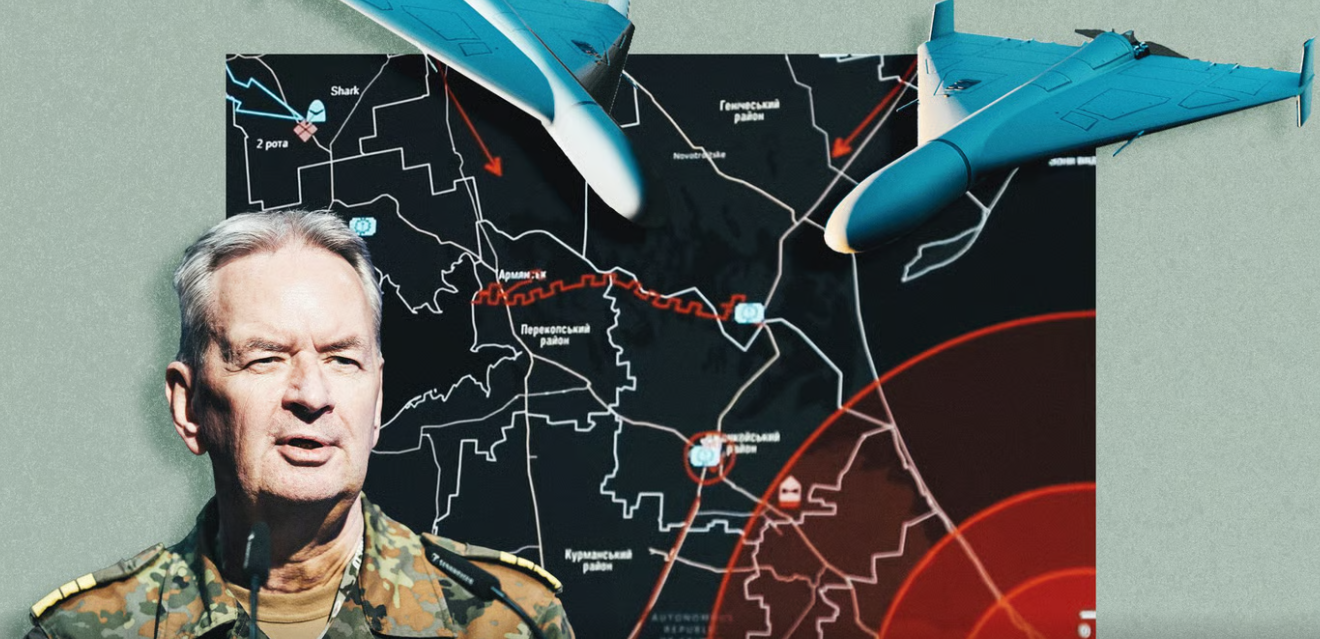
The next military revolution will not begin with a tank, a fighter jet, or even a missile.
It will begin with data.
Millions of signals. Thousands of sensors. Hundreds of threats. One decision.
And the country that can connect these dots fastest may win battles before the first shot is fired.
Germany’s Bundeswehr appears determined not to be left behind.
While headlines often focus on drones, hypersonic weapons, and defense budgets, another, quieter race is underway: the battle to create a digital nervous system for modern warfare. The goal is ambitious. Military leaders want to fuse information from satellites, aircraft, radar systems, ground vehicles, electronic warfare platforms, and intelligence networks into a single, real-time operational picture.
The challenge is staggering.
Modern battlefields generate more information than any human commander can process. A drone swarm can change course within seconds. Electronic attacks can blind sensors. Critical decisions must be made faster than traditional command structures allow.
In this new environment, speed is not an advantage.
It is survival.
That is why Germany is currently testing systems from dozens of technology providers capable of transforming fragmented military information into instant operational insights. The objective is clear: create a sovereign alternative to foreign software platforms while ensuring armed forces can react at machine speed without surrendering strategic autonomy.
This is where the real story begins.
For years, military organizations worldwide have relied on software environments capable of collecting and visualizing enormous amounts of operational data. Yet dependence on external technology suppliers creates strategic questions. Who controls the software? Who owns the data? Who determines future capabilities?
These concerns are driving a growing push for digital sovereignty across Europe.
Germany's answer could come from an emerging alliance between traditional defense expertise and next-generation artificial intelligence.
The vision sounds almost futuristic.
A hostile drone launch is detected by radar over the Baltic Sea. A surveillance aircraft confirms the trajectory. Ground-based sensors validate the threat. AI systems correlate all incoming information instantly, identify likely targets, recommend countermeasures, and prioritize responses.
Human operators remain in control.
But software does the heavy lifting.
What once required dozens of analysts and several communication layers could happen within minutes, perhaps even seconds.
This transformation reflects a broader shift occurring across militaries worldwide. Warfare is becoming increasingly software-defined. Platforms remain important, but competitive advantage increasingly comes from how effectively information is collected, integrated, and acted upon.
The most valuable military asset may no longer be a weapon.
It may be a technology stack.
For Germany, the timing is critical.
The war in Ukraine has demonstrated how rapidly battlefield innovation can occur. Low-cost drones, AI-enabled targeting systems, electronic warfare, and decentralized command networks have reshaped military thinking across NATO. Lessons that once took years to emerge now become visible in weeks.
The result is an unprecedented urgency to modernize digital command structures.
Defense procurement has traditionally moved at a deliberate pace. Software innovation does not.
This cultural collision may prove more challenging than the technology itself.
Can governments buy software as quickly as startups develop it? Can military institutions adapt to continuous upgrades rather than decade-long procurement cycles? Can AI accelerate decision-making while maintaining human accountability?
These questions are no longer theoretical.
They are becoming operational requirements.
The broader significance extends beyond Germany.
Europe is entering a new phase of strategic competition in which technological sovereignty matters as much as industrial capacity. Nations are increasingly seeking alternatives to dependence on external platforms while investing heavily in domestic innovation ecosystems.
The winners of this race will not simply build better software.
They will define how decisions are made in future conflicts.
And perhaps that is the most profound change of all.
The battlefield of tomorrow may still contain soldiers, aircraft, tanks, and missiles.
But behind every move, every response, and every critical decision, there will be an invisible force shaping outcomes.
The algorithm.
And the race to control it has already begun.