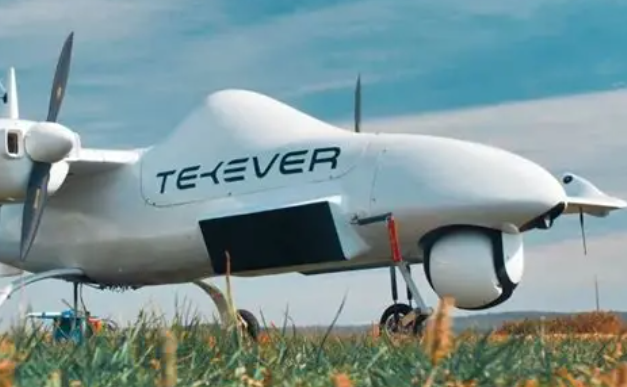
TEKEVER's Real Weapon Isn't the AR3. It's the Feedback Loop.
For decades, military power was measured in factories.
The countries that could build more aircraft, more tanks and more ships were expected to dominate future conflicts. Industrial capacity was strategy. Production lines were power.
That assumption is becoming dangerously outdated.
The journey of TEKEVER's AR3 drone from the coast of Wales to the front lines of Ukraine offers a glimpse into a different future. A future in which military advantage is measured not simply by what can be built, but by how quickly it can evolve.
The aircraft itself is impressive.
But it may not be the most important thing in the story.
The real story is what happens after the aircraft leaves the factory.
For much of modern military history, the relationship between manufacturer and operator was largely linear. Industry produced equipment. Military forces operated it. Feedback traveled slowly through layers of bureaucracy. Improvements often took years to appear.
That model made sense when technologies evolved slowly.
The battlefield no longer does.
Ukraine has become the world's largest laboratory for military innovation. Not because anyone planned it that way, but because survival demanded adaptation. Drones, sensors, communications systems, electronic warfare and software are being modified at a pace that traditional procurement cycles struggle to comprehend.
A capability that works today may be less effective in six months.
A vulnerability discovered this week may require a solution next week.
In that environment, speed has become a strategic resource.
The significance of TEKEVER's development model lies in understanding this reality.
Every mission generates data.
Every operator identifies opportunities for improvement.
Every lesson can be transmitted back to engineers.
Every modification returns to the field for testing under real operational conditions.
The cycle begins again.
And again.
And again.
The result is something far more powerful than a drone.
It is a learning system.
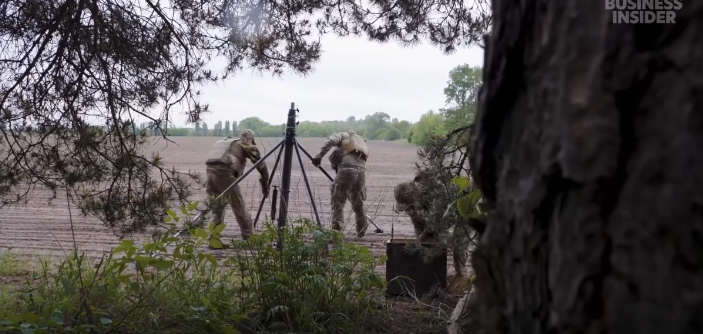
The Business Insider reporting follows the AR3 from production and testing in West Wales to the Ukrainian personnel employing it under some of the most demanding operational conditions in the world. The story illustrates something many defense organizations are still struggling to understand:
The future belongs to those who can shorten the distance between experience and innovation.
This idea is disrupting some of the most established assumptions in defense.
Traditionally, military superiority was associated with technological sophistication. Build the best platform and advantage would follow.
Ukraine is teaching a different lesson.
The most effective capability is not necessarily the most sophisticated capability.
It is often the capability that can adapt fastest.
A drone improved every month may create greater operational value than a platform upgraded every decade.
An engineering team connected directly to operators may produce more battlefield effect than an organization separated by layers of institutional distance.
The implication extends far beyond drones.
This is not really about unmanned aircraft.
It is about the emergence of a new model of defense innovation.
One in which engineers, operators, software developers and industry collaborate continuously rather than sequentially.
One in which operational feedback becomes a strategic asset.
One in which learning itself becomes a weapon.
That should make defense planners uncomfortable.
Because learning cycles do not appear in military parades.
They are difficult to photograph.
They do not always fit procurement frameworks designed for another era.
Yet they may become more decisive than many of the systems those frameworks were originally designed to acquire.
The AR3's journey from Wales to Ukraine ultimately tells a bigger story than the movement of a single aircraft across Europe.
It tells the story of a defense sector undergoing a profound transformation.
Industrial power still matters.
Technology still matters.
Manufacturing still matters.
But an increasingly uncomfortable reality is emerging:
The battlefield is becoming a competition between organizations that can learn and those that cannot.
And in that competition, the most important platform may not be the drone in the sky.
It may be the feedback loop connecting the battlefield to the engineer's desk.