REGENT - The Comeback of the Sea Skimmer
If you want speed, you fly.
If you want endurance, you sail.
And if you want both, prepare to spend a lot of money.
But what if there were a third option?
What if the future of maritime operations lies not in another warship, submarine, or aircraft, but in a machine that deliberately occupies the space between them?
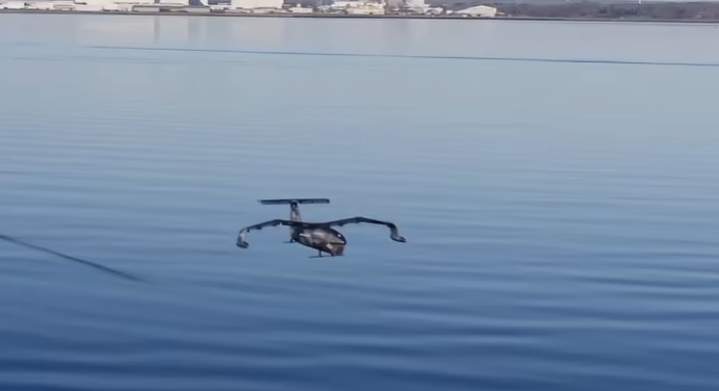
That is what makes REGENT's autonomous sea glider, Squire, so interesting.
At first glance, it looks like a technological curiosity. A drone that flies only a few meters above the water using wing-in-ground effect. Neither quite aircraft nor quite vessel.
But military history is filled with examples of systems that initially appeared niche before altering entire operational concepts.
The most provocative question is not whether Squire is impressive.
It is whether it represents the beginning of a new category of maritime power.
The Forgotten Physics of Military Innovation
Wing-in-ground effect is not new.
Engineers have understood it for decades.
Flying just above the surface creates a cushion of compressed air beneath the wing, dramatically reducing drag and increasing efficiency.
The Soviet Union famously experimented with enormous "Caspian Sea Monsters" that blurred the line between aircraft and ships.
The concept never disappeared.
But technology has changed around it.
Autonomy has improved.
Sensors have improved.
Communications have improved.
Battery technology has improved.
Artificial intelligence has improved.
Suddenly, an old aerodynamic principle starts looking very modern.
The result is a platform capable of moving at speeds reportedly reaching 70 knots while maintaining a profile significantly lower than traditional aircraft.
And that changes the operational discussion.
The Space Between Ship and Aircraft
Modern military procurement tends to categorize platforms into familiar boxes.
Ships.
Aircraft.
Submarines.
Ground vehicles.
But operational problems rarely respect these categories.
Many missions require neither the cost of an aircraft nor the slowness of a vessel.
Surveillance.
Logistics.
Maritime patrol.
Search and rescue.
Distributed sensing.
Communications relay.
Anti-submarine support.
In these missions, the question becomes simple:
Do we really need a helicopter?
Or do we need an effect?
Historically, commanders often had no alternative.
Today, they increasingly do.
The most disruptive military technologies are often not those that perform entirely new missions.
They are those that perform existing missions far more affordably.
Attritable Naval Power
Perhaps the most significant aspect of Squire is not speed.
It is economics.
Modern naval assets are becoming increasingly expensive.
Warships cost hundreds of millions or billions.
Maritime patrol aircraft cost tens or hundreds of millions.
Even helicopters represent substantial investments.
As costs rise, fleet sizes often shrink.
Every platform becomes more capable.
But every loss becomes more painful.
Squire points toward a different philosophy.
Instead of a small number of exquisite assets, organizations may increasingly deploy larger numbers of lower-cost autonomous systems.
The logic is familiar.
We already see it in drones on land.
We increasingly see it in the air.
The maritime domain may simply be next.
The future fleet may not be a collection of individual platforms.
It may be a network.
Some systems expensive.
Others expendable.
All connected.
The Detection Problem
The sea has always rewarded those who remain unseen.
Submarines became strategic weapons because they exploited that reality.
Sea-skimming anti-ship missiles transformed naval warfare for the same reason.
Squire introduces a similar concept from another direction.
By operating extremely close to the surface, such systems may complicate detection, tracking, and engagement compared with conventional airborne platforms.
That does not make them invisible.
Nothing is invisible.
But military competition is rarely about invisibility.
It is about increasing the adversary's difficulty and cost.
And every additional sensor, radar, patrol asset, or interception attempt imposes costs.
The battlefield frequently favors systems that create dilemmas.
The Real Question
The most important question is not whether Squire succeeds.
The important question is what happens if the concept scales.
What happens when maritime forces can deploy hundreds of autonomous sea gliders?
Thousands?
What happens when logistics, reconnaissance, anti-submarine warfare, search and rescue, and distributed sensing become increasingly automated and distributed across numerous low-cost platforms?
The answer could fundamentally reshape maritime operations.
Because the real story is not a sea glider.
The real story is that autonomy is beginning to blur boundaries that once seemed permanent.
The line between ship and aircraft.
The line between sensor and platform.
The line between fleet and network.
And history suggests that when technology starts erasing categories, military revolutions often follow.
Squire may not be the future of naval warfare.
But it asks a fascinating question:
What if the next great maritime platform is neither a ship nor an aircraft, but something in between?