One Soldier, One Vehicle, One Swarm: Rheinmetall and Breaker Are Rewriting Armored Warfare

For more than a century, armored warfare has followed a relatively simple formula.
Add more firepower.
Add more armor.
Add more people.
Now, a new partnership between Breaker and Rheinmetall Defence Australia suggests the next leap forward may require none of the above.
Instead, it may only require a conversation.
The two companies have announced a teaming agreement aimed at integrating Breaker's tactical orchestration agent into the Australian Army's Boxer Combat Reconnaissance Vehicle. The goal is audacious: allow vehicle crews to command autonomous systems through natural voice interactions while continuing to perform their primary combat missions.
At first glance, it sounds almost unbelievable.
A soldier speaking through a standard military headset, issuing commands to a swarm of drones as naturally as talking to a teammate.
Yet according to the companies, that capability has already been demonstrated.
One crew member, reportedly with less than 30 minutes of training, successfully commanded multiple drones while simultaneously operating the vehicle and maintaining normal battlefield responsibilities.
If that capability scales, the implications are profound.
Military organizations around the world face a growing contradiction. Modern battlefields require more sensors, more surveillance, more reconnaissance assets, and more autonomous systems than ever before. Yet armies do not have the personnel to continuously expand vehicle crews and operational teams.
The mathematics simply don't work.
Every additional capability traditionally demands another operator.
Every new sensor requires another specialist.
Every drone requires another pilot.
Or at least it used to.
Human-machine teaming aims to break that equation.
Instead of assigning dedicated operators for every autonomous platform, the technology allows existing crews to supervise networks of robotic systems. The machine handles the complexity. The human provides intent, judgment, and command.
This is where the Boxer integration becomes strategically important.
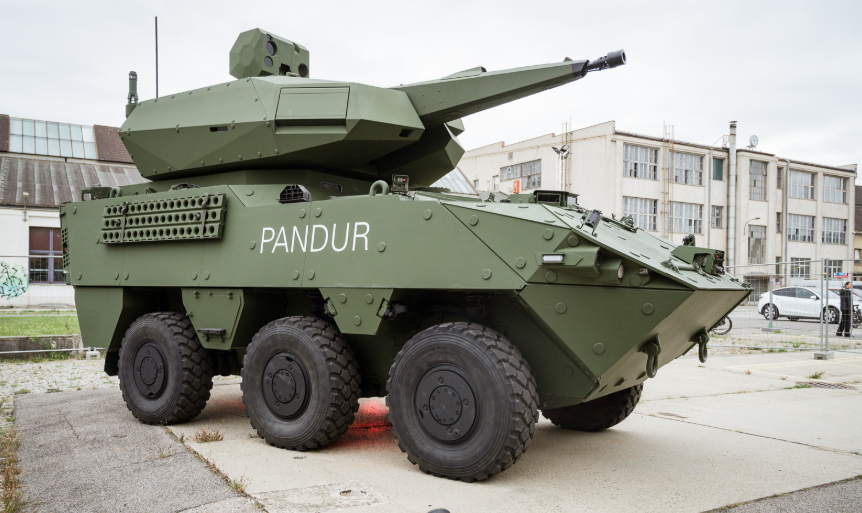
The Boxer is already one of the world's most advanced armored vehicles, designed around an open architecture that allows technologies to be integrated rapidly. By embedding a tactical orchestration agent directly into the platform, Rheinmetall and Breaker are effectively transforming the vehicle into the command center of its own autonomous formation.
The vehicle is no longer just a vehicle.
It becomes the leader of a robotic team.
Imagine a future patrol.
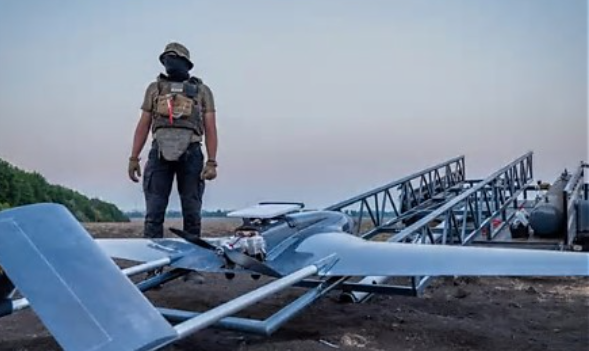
A reconnaissance vehicle deploys aerial drones several kilometers ahead. Ground robots scout dangerous routes. Additional unmanned systems monitor flanks and identify threats. Instead of managing each platform individually through multiple screens and controllers, the crew interacts through simple voice commands.
"Search that ridgeline."
"Track that vehicle."
"Investigate the building."
The autonomous systems coordinate the details.
The human remains in command.
This may represent one of the most practical implementations of artificial intelligence and autonomy in military operations. Rather than attempting to remove humans from the loop, the approach keeps warfighters firmly in control while reducing cognitive burden.
The speed at which the capability apparently moved from concept to demonstration is equally noteworthy.
According to Breaker, its software was running inside Rheinmetall Defence Australia's simulation environment within weeks and operating on the Boxer vehicle only months after initial discussions began.
That pace stands in sharp contrast to traditional defense acquisition programs, which often take years to move from concept to field testing.
It also reflects a larger trend reshaping global defense.
Military organizations increasingly recognize that the next battlefield advantage will come not only from hardware but from software, autonomy, and human-machine collaboration.
The platforms that can effectively integrate robotic teammates may possess a significant operational advantage over those that rely solely on traditional force structures.
The implications extend far beyond Australia.
If successful, the model could be adapted across different armored vehicles, combat formations, and military services worldwide. Every vehicle could potentially become a node in a much larger autonomous network.
Every crew could command capabilities previously requiring entire units.
Every battlefield could become more connected, more informed, and more autonomous.
The most provocative part is this:
The future tank commander may not command more soldiers.
They may command more machines.
And the conversation has already begun.