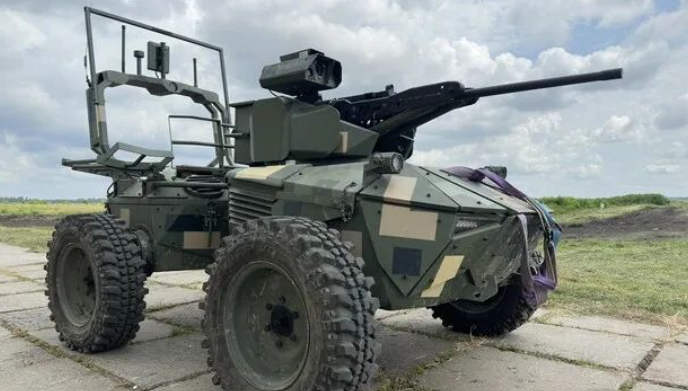
Ondas and Ottopia. From Saving Lives on the Road to Rewriting Warfare: Why the Future of Military Autonomy Is Human-in-the-Loop

From Saving Lives on the Road to Rewriting Warfare
Every technology company begins with a mission.
Few expect that mission to be transformed by war.
When Ottopia was founded, its goal was straightforward: make roads safer through remote vehicle operation and human-assisted autonomy. The company focused on a problem that has challenged the automotive industry for years: how to ensure that autonomous systems remain effective when they reach their operational limits.
Then came October 7.
A call for help would ultimately redirect part of the company's future from civilian mobility to military operations, triggering a transformation that reveals a much broader trend reshaping modern warfare.
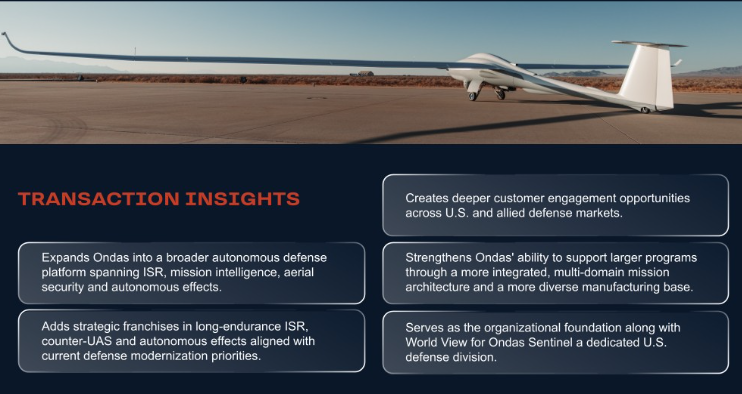
Today's announcement that Ondas is acquiring Ottopia's defense business is more than a corporate transaction.
It is a glimpse into the future of military autonomy.
And that future may look very different from the fully autonomous battlefield imagined by science fiction.
For years, defense discussions have been dominated by a simple narrative: machines will replace humans.
The reality emerging from battlefields is considerably more complex.
The most successful autonomous systems are not those that eliminate humans entirely.
They are the systems that know when they need human help.
That realization sits at the heart of Ottopia's technological approach.
Rather than pursuing complete independence, the company developed what it calls Hybrid AI: a model that combines autonomous operation with human supervision and precise remote intervention.
In practical terms, the machine performs most tasks independently. But when uncertainty rises, communications become challenging, or conditions exceed predefined limits, a human operator can immediately step in and keep the mission moving.
That same logic that helps a vehicle navigate a difficult environment also applies remarkably well to military operations.
Modern battlefields are chaotic, unpredictable, and constantly changing.
Artificial intelligence can identify targets.
Autonomous systems can navigate terrain.
Algorithms can make recommendations.
But warfare still contains ambiguity, judgment calls, ethical decisions, and unexpected developments that remain difficult to automate completely.
The emerging answer is not "human versus machine."
It is human plus machine.
Or, as military organizations increasingly describe it: human-on-the-loop and human-in-the-loop.
This explains why the acquisition is strategically significant.
It brings together two organizations that appear to share a similar vision.
Ondas has championed what it calls "Bots Before Boots."
The concept is simple yet powerful.
Before placing soldiers in danger, deploy autonomous systems.
Send the machine first.
Gather information.
Reduce risk.
Shape the battlespace.
Only then commit human forces when necessary.
This philosophy mirrors a broader transformation occurring across modern militaries.
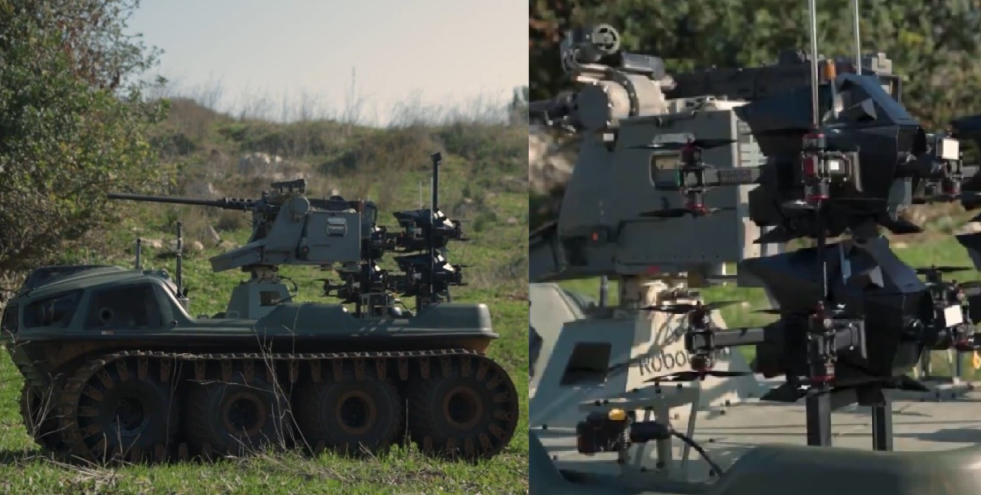
From Ukraine to the Middle East, autonomous systems are increasingly performing reconnaissance, logistics, surveillance, electronic warfare, and high-risk operational tasks.
Not because robots are replacing soldiers.
Because robots are absorbing risk.
The distinction matters.
Historically, military technology focused on increasing lethality.
Increasingly, it focuses on reducing exposure.
The value proposition is no longer simply destroying targets.
It is accomplishing missions with fewer personnel placed in harm's way.
This is where autonomy, remote operation, artificial intelligence, and human supervision converge.
The result is an emerging model of military power that is scalable, distributed, and resilient.
One operator may supervise multiple systems.
Multiple systems may coordinate across domains.
Human decision-makers may intervene only when required.
The battlefield becomes a collaborative ecosystem rather than a collection of individual platforms.
That vision remains in its early stages.
Yet the acquisition of Ottopia's defense business suggests the defense industry believes the transition is accelerating.
What's equally notable is the split itself.
While the defense division joins Ondas, Ottopia's civilian business continues independently, focusing on what many now call Physical AI.
In a sense, both companies will continue pursuing the same fundamental question:
How do humans and intelligent machines work together?
One will answer that question on roads, industrial sites, and commercial environments.
The other will answer it on future battlefields.
For years, the technology sector promised full autonomy.
The battlefield is teaching a different lesson.
The most effective autonomous systems may not be the ones that remove humans entirely.
They may be the ones that know exactly when a human should take control.
The future of military autonomy may therefore belong not to fully autonomous armies.
But to organizations that master the art of combining machine speed with human judgment.
And that may prove to be the most powerful capability of all.