Germany Is Testing Battlefield Innovation Where It Matters Most: With Troops, Not in PowerPoint

Military innovation often sounds impressive in presentations. The real test, however, begins when technology leaves the laboratory and reaches soldiers in the field.
That is exactly what Germany’s Cyber and Information Domain Service is trying to do during the VIGILANT OWL mission in Lithuania.
The idea is simple: develop technology, test it under realistic conditions, collect feedback from the soldiers using it and improve it immediately. Instead of separating developers, military users and innovation teams into different organizations, the Bundeswehr wants them to work together.
Vice Admiral Dr. Thomas Daum, Inspector of the Cyber and Information Domain, describes the approach with a short phrase: “Get out of the silos.”
At the Innovation Day during VIGILANT OWL, that idea became practical. Soldiers contributed their operational experience, civilian technology developers brought technical knowledge, and the Bundeswehr Cyber Innovation Hub coordinated the cooperation.
The focus was not on distant concepts for the next decade. It was on technologies that could become useful for troops much faster.
Among the areas being explored are AI-supported drone detection and networked sensors. Both have become increasingly important in modern military operations, where relatively cheap unmanned systems can create serious problems for forces on the ground.
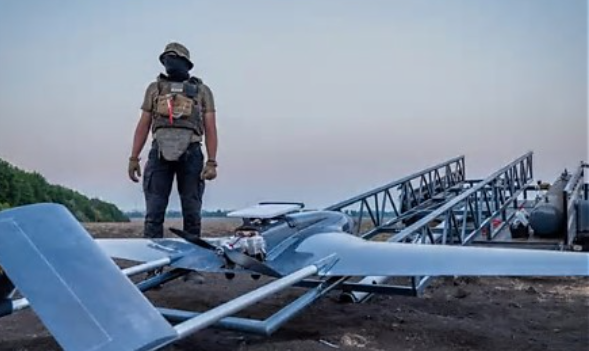
One example presented during the mission is the mobile reconnaissance system called “Baumfalke.”
Its concept is deliberately simple: small sensors, mobile deployment, networked operation and relatively low cost. Instead of relying only on a few expensive systems, the idea is to use equipment that can be placed quickly, connected with other sensors and replaced without creating a major logistical problem.
What makes Baumfalke especially interesting is how it was developed.
Electronic warfare soldiers were directly involved in the process. The system was then deployed during VIGILANT OWL in Lithuania, where users could test it under operational conditions. Their experience is now being used to improve the system further.
That feedback loop may be more important than the technology itself.
Traditional defense development can take years. Requirements are written, contracts are created, prototypes are built and systems are tested before they finally reach the military user. By that time, the operational environment may already have changed.
The approach demonstrated in Lithuania tries to shorten this cycle.
A soldier sees a problem. Developers work on a possible solution. The technology is tested by the people who actually need it. Problems become visible quickly, and improvements can be made before the system becomes too complicated or expensive to change.
This way of working is particularly relevant in areas such as drones, sensors, artificial intelligence and electronic warfare. Technology in these fields develops extremely quickly, and military forces cannot always afford to wait for traditional procurement cycles.
VIGILANT OWL therefore represents more than just another military exercise or technology demonstration.
It shows a different way of thinking about defense innovation.
The Bundeswehr is trying to connect operational experience directly with technological development. The Cyber Innovation Hub acts as a bridge between soldiers and civilian innovators, while the mission environment provides a place to test whether ideas actually work.
That distinction matters.
A technology can look excellent in a laboratory and still fail when soldiers have to transport it, power it, operate it under pressure or integrate it with other equipment.
Field testing exposes those weaknesses early.
The message from Lithuania is therefore quite clear: innovation should not stay inside offices, research departments or isolated development teams.
If a technology is supposed to help soldiers, soldiers need to be involved from the beginning.
The real measure of military innovation is not how advanced a prototype looks.
It is how quickly a useful tool reaches the people who actually need it.