Europe’s Thermal Vision Problem: Two Ukrainian Companies Want to Break China’s Grip on the Supply Chain
Europe has a thermal imaging problem. And two Ukrainian technology companies think waiting for somebody else to solve it is no longer an option.
The Fourth Law and Odd Systems have joined forces to launch Project Foundation, an ambitious initiative to mass-produce long-wave infrared sensors, or microbolometers, in Europe and the United States.
It may sound like a niche semiconductor project. It isn't.
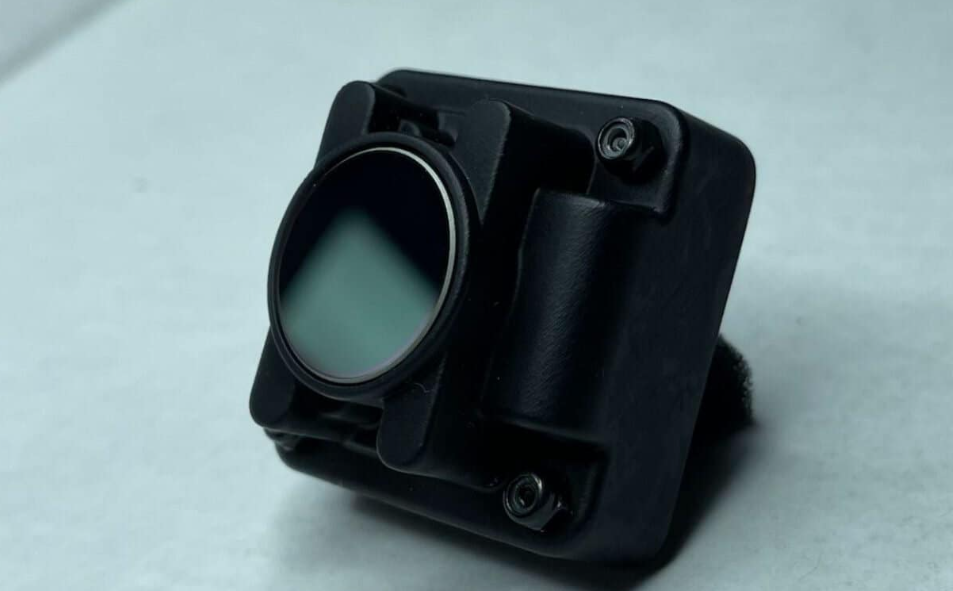
Microbolometers sit at the heart of thermal imaging cameras. They make it possible to detect heat-emitting objects in darkness or through smoke. And according to the companies behind Project Foundation, Western countries remain too dependent on outside suppliers, particularly China, for this technology.
Their answer is not simply to open another factory. The goal is to change the scale of Western production.
Project Foundation aims to quadruple sensor production in Europe and double it in the United States within three years. Mass production at the new facilities is scheduled to start in 2027.
The numbers explain why the founders believe such a dramatic expansion is necessary.
According to Odd Systems co-founder Yaroslav Azhniuk, Europe currently manufactures fewer than 500,000 thermal imaging sensors per year. Ukraine, he says, consumes roughly that quantity in just five months.
That mismatch is striking enough. But there is another problem: price.
Azhniuk says European sensors are around five times more expensive than Chinese alternatives and can also be extremely difficult to obtain because European customers need the available production themselves.
In other words, this is not only a question of technology. It is a question of manufacturing capacity, availability and control over a strategically important supply chain.
Project Foundation wants to tackle that problem on both sides of the Atlantic.
Its headquarters will be located in Eindhoven, the Netherlands, an important European semiconductor technology hub. Manufacturing will be divided between two main locations: First Foundation in Europe and Second Foundation in the United States.
The ambitions are substantial. Earlier plans for the European facility indicated potential production capacity of one million units per year.
Funding is also expected to come from several directions. The founders plan to combine their own capital with private investment, government grants and advance orders from customers. Project Foundation also says partnerships have already been established with major research laboratories and buyers of thermal imaging optics.
But perhaps the most interesting part of the story is where the initiative comes from.
These are Ukrainian companies trying to turn lessons from an enormous real-world demand for thermal technology into industrial capacity outside Ukraine.
For Europe and the United States, the argument behind the project is straightforward: depending heavily on foreign production for an important technology creates vulnerability. Building domestic production gives Western customers another source.
For the Ukrainian companies, Project Foundation represents something bigger than simply selling more thermal cameras. They are trying to move deeper into the technology stack by addressing one of the crucial components inside those cameras.
And that is what makes Project Foundation worth watching.
The thermal imaging race is no longer only about who can design the best device. Increasingly, it is about who can manufacture the components, at what scale, at what price, and without depending on a supply chain they do not control.
If Project Foundation reaches its targets, two Ukrainian companies will have done more than build another semiconductor business.
They will have helped redraw part of the West’s thermal imaging supply chain.