Europe’s “Drone Wall” Gets Eyes: Weibel Lands Record €84 Million Polish Radar Deal
Europe has talked about building a “drone wall.” Poland is starting to buy the hardware that could make it real.
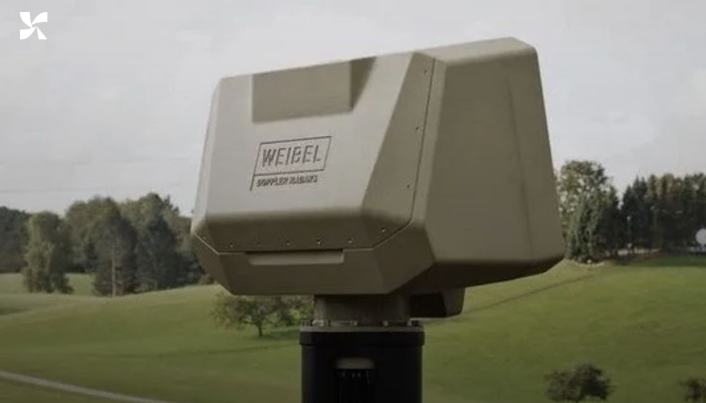
Danish radar specialist Weibel Scientific has secured an €84 million contract with Polish defence electronics company PIT-RADWAR to supply its XENTA-M5 radars for Poland’s SAN Counter-UAS programme. It is the largest order in Weibel’s history.
That headline number matters. But the more important story is what Poland is buying.
Eyes.
Modern air defence is no longer only about spotting fast jets and missiles high in the sky. Cheap drones, small unmanned aircraft and low-flying threats have rewritten the equation. They can operate close to terrain, present small radar signatures and force defenders to decide quickly whether an object is irrelevant, suspicious or dangerous. Defence Matters notes that low altitude, small physical dimensions and background clutter can make these targets particularly challenging to detect and track.
That is where XENTA-M5 enters the picture.
According to Weibel, its radar can detect, track and classify targets ranging from small, low-flying drones to aircraft and other airborne threats. Rather than acting as the weapon that destroys a target, the radar supplies the continuously updated air picture that allows a larger command-and-control system to decide what happens next.
In other words, XENTA-M5 sits near the beginning of the kill chain: find it, understand it, then decide how to deal with it.
That makes the Polish SAN project particularly interesting.
SAN is being developed as an integrated Counter-UAS architecture within Poland’s national air defence, connecting sensors with command-and-control infrastructure and effectors. XENTA-M5 will operate in the sensor layer, feeding radar information into that broader architecture.
For Europe, this is where “drone wall” stops being a political slogan and starts becoming an engineering problem.
A wall against drones is not literally a wall. It is a network: radar, passive sensors, communications, software, command systems, electronic warfare and kinetic effectors must identify and react to threats fast enough to matter.
And Poland is building that capability on Europe’s eastern flank. Weibel itself explicitly presents SAN as part of the transition from Europe’s “Drone Wall” ambition toward operational counter-UAS capability.
For Weibel Scientific, meanwhile, the deal is transformative.
The Danish company says it has already delivered more than 6,000 radar systems to customers in over 45 countries. But €84 million moves Weibel into a different industrial league. The company acknowledges that the order creates new demands on production capacity and delivery at a time when European defence procurement is accelerating.
There is also an important unknown. Neither the number of XENTA-M5 radars covered by the €84 million contract nor the detailed delivery schedule has been publicly disclosed, according to reporting on the deal.
So the real test starts now.
Winning a record defence contract is one achievement. Producing at scale, delivering on schedule, integrating successfully into a complex national air-defence architecture and performing against difficult low-altitude targets is another.
But the strategic direction is unmistakable.
Europe spent years debating how to defend itself against the drone age.
Poland is now buying the sensors.
And an €84 million order from the edge of NATO may be a sign of where Europe's next defence-industrial boom is heading.