Baltic Dome: The Baltic Sea Is Becoming Europe’s Most Dangerous Blind Spot
Wars don't always begin with explosions.
Sometimes they begin with a cable going dark.
A pipeline suddenly stops operating. A navigation signal disappears. An underwater sensor detects something unusual but cannot identify it. A drone circles a harbor for a few minutes before vanishing from radar.
Nobody knows whether these are accidents, tests, warnings, or the first move in something much larger.
This ambiguity has become one of Europe's greatest security challenges.
And nowhere is that challenge more visible than in the Baltic Sea.
Stretching across one of the world's most strategically important regions, the Baltic is no longer merely a body of water between nations. It has become a dense web of commercial shipping routes, energy infrastructure, fiber-optic cables, military assets, ports, offshore installations, and critical supply chains.
Everything depends on it.
And almost everything is vulnerable.
Today's threats rarely announce themselves. Modern adversaries increasingly operate below the threshold of open warfare. They probe networks instead of crossing borders. They test infrastructure rather than attack cities. They exploit confusion rather than seek immediate confrontation.
The result is a new battlefield where detection matters more than retaliation.
The challenge is simple to describe and extraordinarily difficult to solve.
How do you distinguish ordinary behavior from hostile intent?
A cargo vessel changes course.
A drone appears above a port.
An underwater object moves near a cable.
Individually, these observations may mean nothing.
Together, they may reveal everything.
This is precisely the problem Germany's Cyber Innovation Hub is attempting to tackle through its Baltic Dome initiative.
The concept reflects a profound shift in military thinking. Instead of focusing exclusively on weapons, planners are increasingly focused on awareness. Before a threat can be stopped, it must be seen. Before it can be seen, scattered data must be connected into a coherent picture.
The future belongs to those who can see patterns first.
That sounds like an artificial intelligence problem.
Because it is.
Modern maritime environments generate overwhelming amounts of information. Radar feeds, sonar systems, satellite imagery, thermal observations, acoustic signals, vessel tracking data, drone surveillance, weather conditions, and intelligence reports create an endless stream of inputs.
Human analysts alone cannot process this volume in real time.
Algorithms can.
This reality explains why startups are suddenly becoming as important to national security as traditional defense contractors.
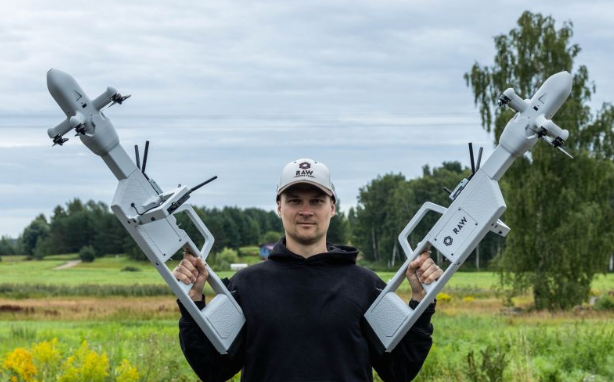
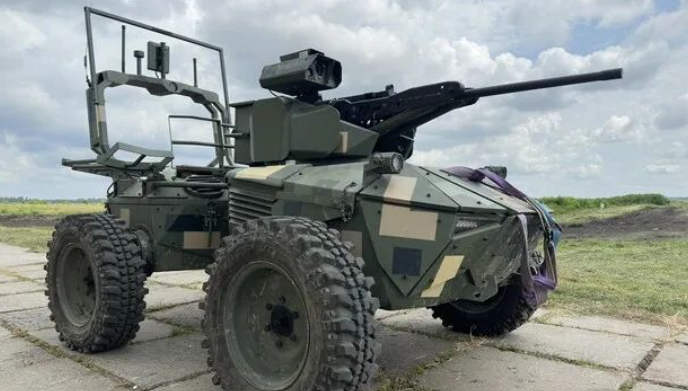
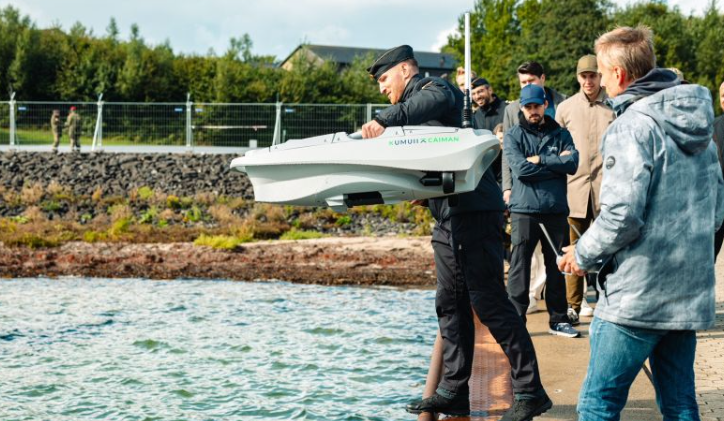
The technologies showcased in Baltic Dome reveal where defense innovation is heading. Autonomous surface vessels that can patrol for weeks. Underwater robots capable of inspecting critical infrastructure in poor visibility. AI-powered acoustic systems that recognize patterns hidden within ocean noise. Advanced satellite analytics able to detect anomalies invisible to conventional monitoring.
These technologies are not science fiction.
They are becoming operational necessities.
And they represent a growing recognition that modern defense is increasingly a software challenge.
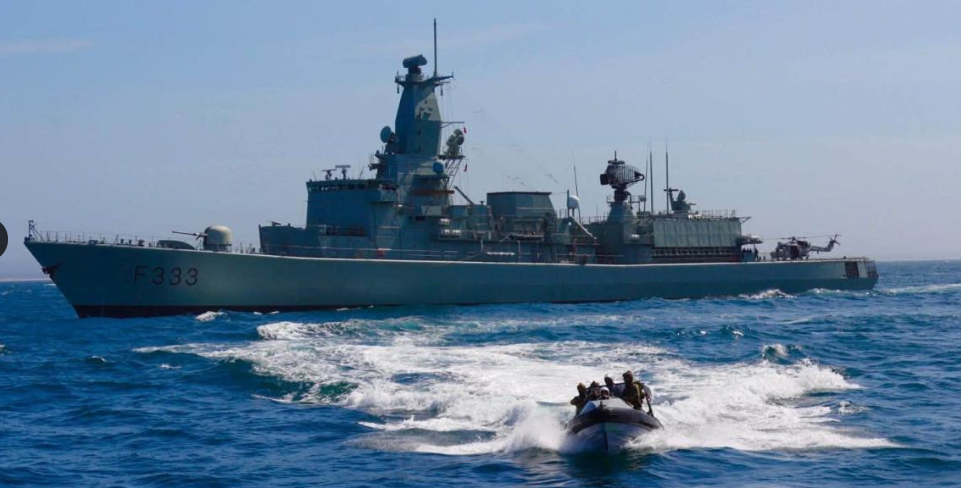
The most valuable military asset might not be a frigate or a submarine.
It might be the platform connecting every sensor around them.
This creates a fascinating power shift.
For decades, military advantage was largely determined by who possessed the biggest platforms and the most firepower. Today's strategic advantage increasingly depends on who can transform information into decisions faster than their competitor.
The winner is not necessarily the side that sees everything.
It is the side that understands what it sees.
That distinction matters enormously in the Baltic region.
Critical maritime infrastructure stretches across thousands of kilometers. Monitoring every meter physically is impossible. Continuous awareness will increasingly depend on networks of autonomous systems supported by artificial intelligence.
The stakes are enormous.
A damaged cable can disrupt communications for entire regions. Interference with maritime infrastructure can impact trade flows, energy security, and military readiness simultaneously. Small incidents can create strategic consequences.
This is why initiatives such as Baltic Dome deserve attention far beyond defense circles.
They represent a broader transformation in how countries approach security.
Tomorrow's conflicts may not begin with fleets crossing oceans or aircraft crossing borders.
They may begin with data anomalies.
An unusual acoustic signal.
A suspicious drone flight.
A vessel behaving just differently enough to matter.
The future of national security may depend on recognizing those signals before anyone else does.
And in the Baltic Sea, the race to achieve that capability has already begun.