Anduril and Origin Robotics. When a $61 Billion Giant Knocks on a Four-Year-Old Startup's Door
For decades, the defense industry followed a predictable hierarchy.
Innovation flowed from large defense primes.Governments bought from established contractors.Startups hoped to become suppliers somewhere deep inside the industrial chain.
That model is beginning to crack.
The memorandum of understanding between Anduril Industries, one of the world's most valuable defense technology companies, and Latvia's Origin Robotics is far more significant than it first appears.
At first glance, it looks like another industry partnership.
It isn't.
It is a signal that the center of gravity in defense innovation is shifting.
A company valued at approximately $61 billion did not acquire Origin Robotics. It did not build a competing system. It did not wait for a lengthy internal development program.
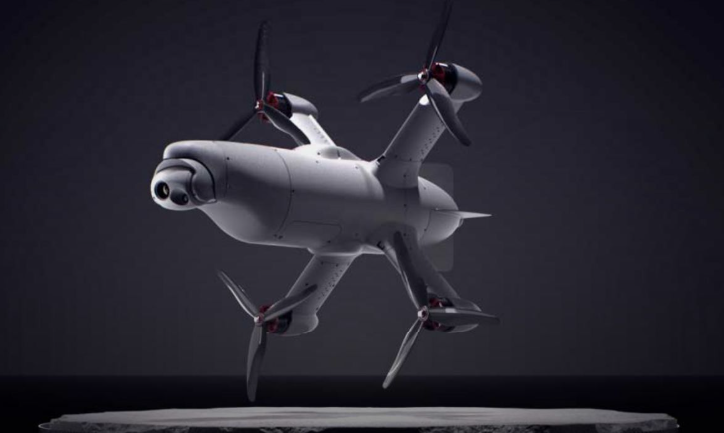
Instead, it chose to integrate Blaze, Origin's interceptor drone, into Lattice, Anduril's command-and-control ecosystem.
Why?
Because the market is changing faster than traditional defense cycles can keep up.
And because Origin Robotics already solved a problem.
Founded only in 2022, the Latvian company has accomplished something many defense startups spend decades chasing: operational adoption.
Blaze is not a concept model displayed at trade shows.
It is a fielded capability.
It carries NATO codification.
It is already in service with military users in Latvia, Estonia, and Belgium.
France selected the system following a formal evaluation process and is moving toward local assembly.
For a startup that barely existed a few years ago, those are remarkable achievements.
But the truly important story is not about Origin.
It is about what Anduril's decision reveals.
For years, military procurement revolved around technological superiority.
The assumption was straightforward: larger companies possessed greater resources, bigger engineering teams, and larger research budgets.
That logic increasingly collides with the realities of modern warfare.
Ukraine has demonstrated that innovation no longer emerges exclusively from billion-dollar laboratories.
Sometimes it comes from small teams working under the pressure of immediate battlefield requirements.
Commercial drones became military assets.
Software updates became operational improvements.
Months replaced years as the standard innovation cycle.
The result is a new strategic reality:
The best solution may no longer come from the biggest company.
It may come from the company learning fastest.
That is precisely what makes the Anduril-Origin partnership fascinating.
Anduril understood something many organizations still struggle to accept.
In an era of accelerated military adaptation, speed matters more than prestige.
Waiting to develop an internal alternative can mean arriving too late.
Building everything yourself can become a strategic disadvantage.
The winner is often the organization capable of identifying proven solutions and integrating them rapidly.
In many ways, this partnership resembles the broader transformation occurring across the defense sector.
The battlefield has become a laboratory.
The development cycle has become continuous.
The distinction between startup innovation and military capability is increasingly disappearing.
Defense technology is becoming an ecosystem rather than an industry.
Anduril's Lattice platform reflects precisely this trend.
The future is unlikely to belong to isolated platforms operating independently.
Instead, success will come from architectures capable of integrating sensors, interceptors, autonomous systems, electronic warfare assets, and command networks into a single operational picture.
Viewed from that perspective, Blaze is not simply another interceptor drone.
It is a node within a wider system.
A capability that can be connected, scaled, and employed alongside other technologies.
This is the logic increasingly shaping modern defense competition.
The question is no longer who builds every component.
The question is who builds the ecosystem that allows the best components to work together.
That distinction matters.
Historically, small defense companies dreamed of winning contracts from larger companies.
Today, increasingly, large defense companies are searching for the most innovative small firms.
The relationship is becoming more symmetrical.
And perhaps that is the most important lesson of all.
A four-year-old startup from Latvia is now collaborating with one of the world's most influential defense technology companies, not because it is larger, wealthier, or older.
But because it solved a problem faster.
In the defense industry of the twenty-first century, that may be the most valuable capability of all.
Not size.
Not history.
Not even technology.
The ability to learn, adapt, and deliver before everyone else.
.jpg)