AI Doesn't Save Lives. Reliable Robots Do. The Hard Truth Behind the Future of Military UGVs
Artificial intelligence has become the defense industry's favorite buzzword.
Every week seems to bring announcements about autonomous weapons, AI-enabled targeting, machine-learning battle networks, and robotic vehicles that promise to revolutionize warfare. Investors love it. Governments fund it. Marketing teams build entire campaigns around it.
But on the battlefield, wounded soldiers do not care about buzzwords.
They care about one thing:
Will the vehicle arrive, survive, and bring them home?
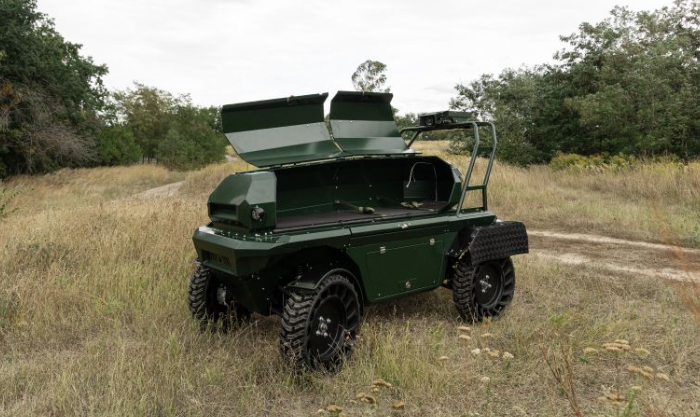
That uncomfortable reality sits at the center of the development philosophy behind MAUL, a robotic CASEVAC platform developed by AIDronesUA. While much of the world is focused on artificial intelligence and autonomy, engineers and operators working directly with casualty evacuation missions are discovering that the most important innovations are often far less glamorous.
The future of military ground robotics may not be won by the company with the most impressive AI presentation.
It may be won by the company that listens fastest to soldiers.
The Battlefield Is the Ultimate Product Manager
Defense technology traditionally follows a slow cycle.
Engineers design a system. Military officials evaluate it. Procurement agencies purchase it. Years later, troops begin using it.
Modern warfare no longer allows that luxury.
The pace of combat innovation has accelerated beyond traditional acquisition cycles. Ground robotic systems are being adapted, modified, repaired, and redesigned almost continuously. New battlefield requirements emerge in weeks rather than years.
For MAUL, many improvements reportedly originate directly from operators using the platform in real evacuation missions.
Their observations do not disappear into bureaucratic procurement processes.
Instead, feedback moves rapidly from combat personnel to engineers, then into prototypes, testing, and deployment.
That speed may be more valuable than any individual technological breakthrough.
The Most Important Problems Are Usually Boring
The defense industry often celebrates dramatic technological achievements.
Autonomous navigation.
Computer vision.
Swarming algorithms.
Predictive artificial intelligence.
All impressive.
Yet none of these matter if a wounded soldier falls off the platform during evacuation.
None matter if the vehicle cannot cross damaged terrain.
None matter if repairs take days instead of hours.
None matter if different systems refuse to work together.
The reality of battlefield robotics is brutally practical.
Success depends on details.
How well the casualty is protected from additional injury.
How quickly a damaged component can be replaced.
How reliably communications function under combat conditions.
How effectively mobility systems handle mud, debris, shell craters, and obstacles.
These engineering challenges rarely generate headlines. Yet they often determine whether an evacuation succeeds or fails.
The Great AI Reality Check
This does not mean autonomy is unimportant.
Quite the opposite.
Reducing operator workload, improving navigation, and enabling smarter robotic behavior will undoubtedly play a major role in future battlefield systems.
But there is a growing difference between meaningful autonomy and AI theater.
Many defense companies are racing to insert artificial intelligence into products because markets demand it.
The best military engineers ask a different question:
Does this make the platform better?
The answer is not always yes.
Sometimes software delivers the solution.
Sometimes mechanical redesign creates a greater improvement.
Sometimes the real challenge is integrating multiple systems into a coherent platform that operators can trust under fire.
Technology for technology's sake rarely survives battlefield testing.
Practicality does.
Reliability Is the New Revolution
The biggest lesson from modern combat may be that reliability has become a strategic advantage.
A robot that works every time is often more valuable than a revolutionary system that works most of the time.
Military organizations are increasingly discovering that operational availability matters more than ambitious marketing claims.
An autonomous feature that fails during evacuation can create danger.
A simple but dependable system can save lives.
This shift in thinking is quietly reshaping the defense robotics sector.
The winners may not be those building the smartest robots.
They may be those building the most trustworthy ones.
The Future Isn't About AI Alone
Ground robotics will undoubtedly become more autonomous.
Artificial intelligence will continue to improve navigation, obstacle avoidance, sensor fusion, and mission planning.
But the future belongs to platforms that combine advanced technology with battlefield practicality.
For developers of systems like MAUL, every innovation ultimately faces a simple test:
Does it make casualty evacuation safer, faster, and more reliable?
If not, it does not matter how impressive the technology sounds.
Because on the battlefield, success is not measured in algorithms.
It is measured in lives saved.