The Drone Gold Rush Is Ending. The Defense Giants Are Being Born
Every technological revolution begins with fragmentation.
Every industrial revolution ends with consolidation.
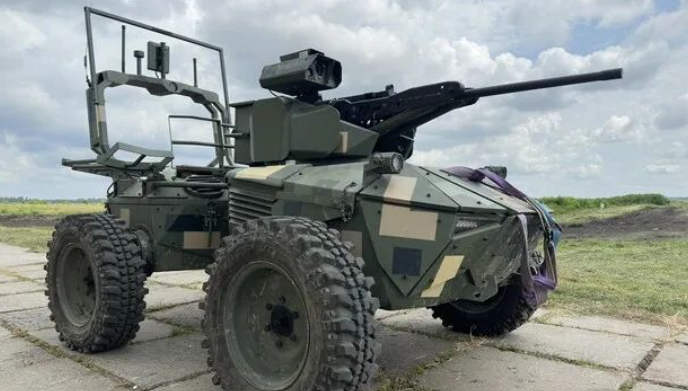
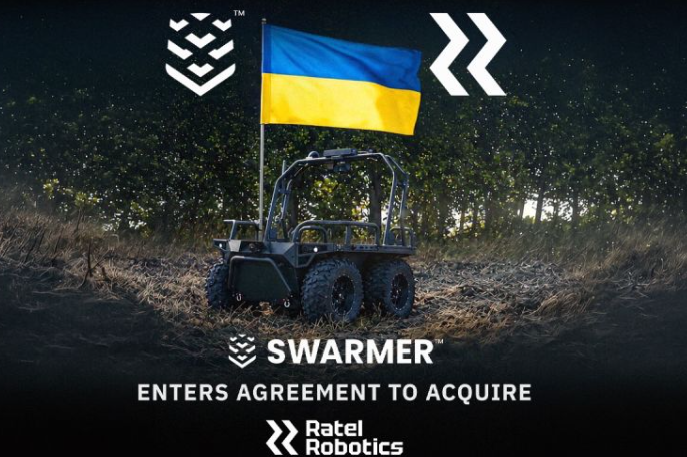
The reported $224 million acquisition of Ukrainian robotics manufacturer Ratel Robotics by Nasdaq-listed Swarmer may be remembered as more than a corporate transaction. It may represent the moment Ukraine's drone industry entered a new phase of evolution.
The startup phase is ending.
The industrial phase is beginning.
And with it comes an uncomfortable question:
Who will ultimately capture the value created by the most battle-tested military technology ecosystem on Earth?
The World's Most Brutal Startup Accelerator
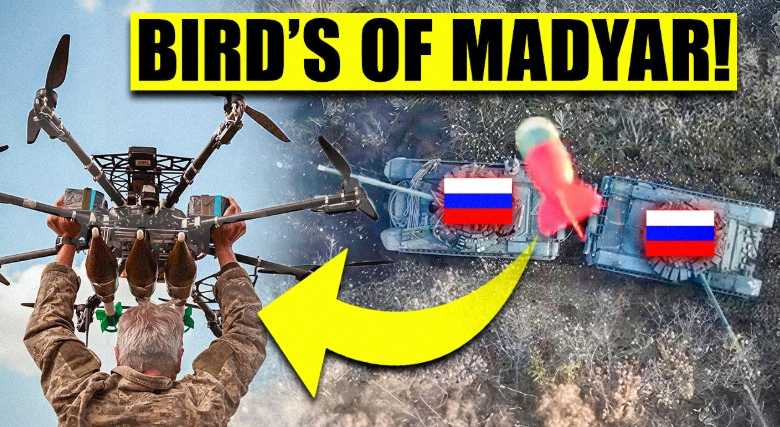
Ukraine did not deliberately set out to create more than 500 drone and defense technology companies.
War created the conditions.
Unlike many traditional defense markets, procurement became radically decentralized. Hundreds of frontline units searched for solutions that worked and bought them rapidly. Bad ideas disappeared. Effective ones survived.
The result was something almost unprecedented.
A defense innovation ecosystem operating under live combat conditions.
Every day became a product test.
Every mission became a user review.
Every battlefield failure became immediate feedback.
Silicon Valley often speaks about rapid iteration.
Ukraine operationalized it under artillery fire.
The result was an explosion of innovation unlike anything seen in the defense sector for decades.
But innovation and industrial scale are rarely the same thing.
The Fragmentation Problem
The very mechanism that produced innovation now threatens to limit growth.
A market populated by hundreds of small companies generates competition, experimentation, and creativity.
It does not automatically generate global champions.
Manufacturing capacity requires capital.
International expansion requires capital.
Certification requires capital.
Global sales networks require capital.
Large-scale production requires capital.
Eventually, technology companies reach a point where engineering excellence is no longer enough.
The battle shifts from invention to expansion.
And expansion demands resources.
This is where consolidation becomes inevitable.
The most successful technologies increasingly require organizational structures capable of serving global markets rather than individual military units.
The drone startup that wins on the battlefield may not necessarily win in global markets.
Those are often different competitions.
The New Defense Formula
Historically, defense innovation followed a familiar model.
Governments funded research.
Large contractors developed systems.
Armed forces purchased equipment.
Ukraine reversed the sequence.
Combat came first.
Innovation followed.
Industry grew around operational necessity.
Today, many Ukrainian companies possess something extraordinarily valuable:
Combat data.
Not marketing presentations.
Not simulations.
Not laboratory results.
Combat evidence.
The war has generated an enormous repository of operational knowledge about drones, robotics, autonomous systems, electronic warfare, logistics, battlefield networking, and adaptation under pressure.
That knowledge may become one of the most valuable defense assets of the coming decade.
The question is who commercializes it.
The Capital War
The acquisition of Ratel highlights a reality that extends far beyond Ukraine.
Technology and capital often follow different geographies.
Innovation may emerge in one location.
Scale often emerges somewhere else.
This is not unique to defense.
It is a recurring pattern in technological history.
The laboratories, engineers, and entrepreneurs generate breakthroughs.
The capital markets determine which breakthroughs become industries.
As defense technology becomes increasingly attractive to international investors, Ukraine faces both an opportunity and a challenge.
The opportunity is obvious.
Global investment can accelerate growth, expand production, open markets, and strengthen defense ecosystems.
The challenge is equally obvious.
Value creation and value capture are not always located in the same place.
The country that creates innovation is not automatically the country that benefits most from it.
From Workshops to Empires
The most fascinating aspect of the drone revolution is that it increasingly resembles previous industrial revolutions.
The early automobile industry consisted of hundreds of manufacturers.
The early aviation industry consisted of hundreds of manufacturers.
The early software industry consisted of thousands of startups.
Over time, consolidation transformed fragmented markets into industrial ecosystems dominated by larger players.
Defense technology now appears to be entering a similar cycle.
Hundreds of companies compete.
A smaller number begin acquiring capabilities.
Platforms evolve into ecosystems.
Products evolve into integrated solutions.
The winners are no longer merely designing drones.
They are building infrastructure.
The Strategic Question
The acquisition of a robotics manufacturer by a drone swarm software company is not simply vertical integration.
It is a glimpse of the future.
The next generation of defense companies may not specialize in aircraft, drones, robotics, or software separately.
They may combine all of them.
Autonomy.
Robotics.
Artificial intelligence.
Production.
Operational data.
Distribution.
Capital.
The true competitive advantage may emerge from integration rather than specialization.
And that raises the most important question of all.
Ukraine has created perhaps the world's only large-scale ecosystem of continuously battle-tested military innovation.
The technology exists.
The talent exists.
The operational knowledge exists.
The capital is arriving.
The question is no longer whether value will be created.
The question is where that value will ultimately reside.
Because fragmentation wins the innovation war.
But consolidation often wins the capital war.
And history suggests that the organizations controlling both usually shape the future.