How SpringDay26 in Strausberg Turned Project Eagles into a Drone Innovation Runway
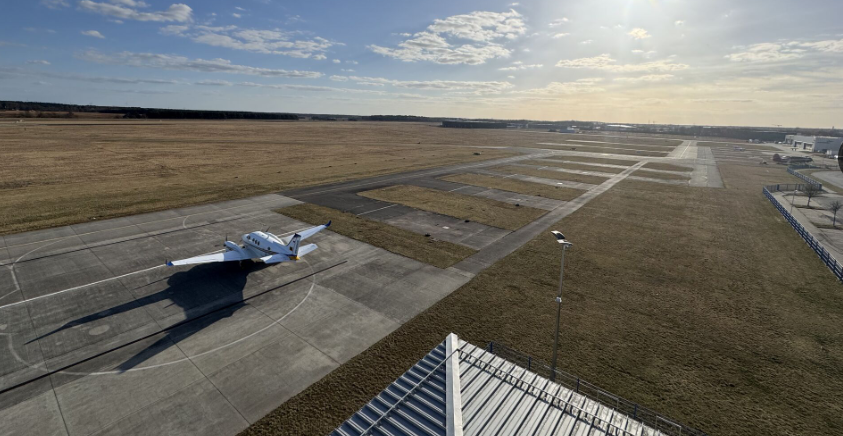
On a crisp spring day in Strausberg, the future of aerospace did not arrive with the roar of jet engines. It arrived quietly — in conversations, prototypes, flight plans, and ideas exchanged inside the HANGAR start‑up center. SpringDay26 was not just another networking event. It was a snapshot of how Europe’s next generation of aerospace innovation is being built.
At the heart of the gathering stood Project Eagles and its EVE drone, a platform designed not merely to fly, but to serve a purpose far beyond the runway. The setting could not have been more fitting. HANGAR: Start‑up Zentrum Strausberg has positioned itself as a growing hub for aerospace innovation and startup growth — a place where ideas are expected to leave the whiteboard and take to the air.
Infrastructure as a catalyst, not a constraint
What separates Strausberg from many innovation venues is geography paired with intent. Multiple airfields located in close proximity offer something rare in Europe’s tightly regulated airspace: real opportunities for UAV development and flight testing without excessive friction.
For drone developers, this matters. Innovation in aviation cannot exist solely in simulation environments. Systems like EVE — particularly those aimed at wildfire detection and early warning — require real‑world validation. Sensors must be tested against smoke, terrain, and changing light conditions. Communication links must be stressed. Endurance must be proven.
At SpringDay26, infrastructure was not treated as background. It was part of the conversation.
From networking to knowledge exchange
As the event transitioned into its networking phase, discussions quickly moved beyond introductions. Participants exchanged insights on autonomous systems, sustainable aviation, and the growing need for climate‑focused aerospace solutions.
Wildfires, once seasonal emergencies, are now persistent threats. Early detection is no longer a “nice‑to‑have” — it is a strategic necessity. The EVE drone embodies this shift. Designed as part of a wildfire detection UAV project, it reflects a broader trend: aerospace innovation increasingly intersects with climate resilience and public safety.
What emerged from the conversations was not just feedback on a single platform, but a shared understanding that future air mobility must be purpose‑driven.
Collaboration over competition
SpringDay26 also highlighted a cultural change within the aerospace startup ecosystem. Rather than guarded pitches and competitive secrecy, the dominant tone was collaboration. Engineers spoke with policy thinkers. Startup founders exchanged notes with infrastructure providers. Ideas were challenged openly.
This openness is critical in an industry where regulation, certification, and public trust shape success as much as technology does. Early‑stage collaboration can shorten development cycles and prevent costly missteps later.
In this sense, the event functioned as a live systems integration exercise — not of hardware, but of people and perspectives.
The future takes shape on the ground
The vision discussed at SpringDay26 extended well beyond drones themselves. Topics ranged from smart airports and air mobility concepts to how autonomous systems can be responsibly integrated into shared airspace.
The underlying question was clear: how can aerospace innovation scale without repeating the mistakes of the past?
The answer, at least in Strausberg, seems to lie in ecosystems rather than isolated breakthroughs. Infrastructure that supports testing. Events that encourage honest dialogue. Projects like EVE that align technology with societal needs.
A quiet signal of what’s next
SpringDay26 did not announce billion‑euro deals or headline‑grabbing acquisitions. Its significance was subtler — and arguably more important. It demonstrated how Europe’s aerospace future is being shaped from the ground up, by startups willing to engage with real problems, and by environments designed to let them fly.
In Strausberg, the runway to the future is already open.