Enigma Emerges From Stealth and Rewrites the Rules of Military Logistics
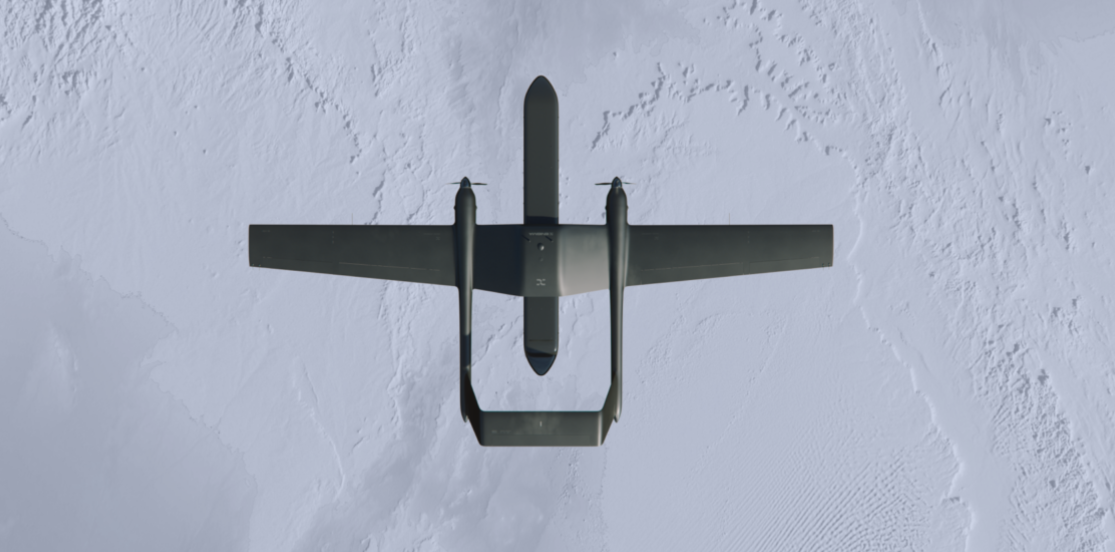
Forget everything you think a drone is supposed to look like.
No fuselage. No runway. No pilot waiting for clearance. What Enigma is building doesn’t resemble an aircraft so much as a capability—one designed for a future where supply lines are contested, runways are cratered, and waiting for a C‑130 is no longer an option.
This week, the contested logistics startup emerged from stealth with a $5 million U.S. Air Force contract, roughly $2 million in venture funding, and a message aimed squarely at the Pentagon: autonomy isn’t about aircraft—it’s about outcomes.
At the center of Enigma’s vision is a system that looks deceptively simple: a sleek, flying‑wing platform paired with a detachable, air‑droppable cargo pod capable of hauling up to 1,000 pounds over distances approaching 2,000 nautical miles. No runway required. No recovery needed. Fly, drop, exit.
The goal is brutally pragmatic—get critical supplies to frontline operators fast, at extreme distances, without tying up scarce manned airlift assets.
“We’re not interested in science projects,” said Enigma founder and CEO Reese Mozer. “We’re interested in things that can actually be fielded—within 12 to 24 months.”
Built backwards from the mission
Enigma’s leadership team isn’t new to autonomy. Mozer, Dr. Vijay Somandepalli, and Andrew Sousa previously founded American Robotics, which they sold to Ondas Holdings in a $70.6 million deal. This time, they took a different approach.
Instead of building hardware first and hunting for a use case later, the team conducted more than 500 stakeholder interviews across the Department of Defense to understand where logistics actually breaks down in a fight.
The answer kept pointing to the same problem: runway dependence.
In places like the Indo‑Pacific, many islands have no airstrips at all—and those that do are likely to be targeted early in a conflict. Traditional airlift assumes infrastructure that may not exist when it’s needed most.
So Enigma designed around absence.
Phoenix and Strata
The company’s first platform, Phoenix, is the physical manifestation of that philosophy. Described by Mozer as “a flying wing you attach a cargo pod to,” Phoenix is optimized for range, payload, and cost. Enigma has already built several units, claiming they are an order of magnitude cheaper than comparable systems.
But hardware is only half the story.
The real leverage sits in Strata, Enigma’s command‑and‑control software. Strata orchestrates autonomous logistics at scale—tracking what supplies are needed, where shortages exist, and which assets can fill them. It integrates directly with existing military C2 ecosystems, including platforms from Palantir and Anduril.
The ambition is clear: logistics that behave more like Amazon Prime than Air Mobility Command.
“You order something,” Mozer said, “and it shows up.”
Autonomy without babysitting
Crucially, Enigma isn’t pitching autonomy as a single clever drone—it’s pitching fleet‑level orchestration across thousands of miles, with or without continuous communications.
Phoenix can fly preplanned missions autonomously and drop payloads over austere locations—forward units, remote islands, or temporary operating bases—without landing or recovery infrastructure.
That autonomy is what caught the attention of senior logistics leaders.
Among Enigma’s advisors are Gen. (ret.) Mike Minihan, former commander of Air Mobility Command, and Gen. (ret.) Charles Hamilton, former commander of Army Materiel Command. Both joined because they’ve seen the gap firsthand.
“There’s never been a crisis where supply met demand,” Minihan said. “This gives lower‑level commanders a way to solve their own problems without waiting in line.”
From stealth to scale
Enigma already holds two CRADAs—one with the Air Force and one with DEVCOM—and has received 11 letters of support from Army, Air Force, and SOF organizations. Production scale‑up is planned within 12 months, with operational deployment targeted for 2027.
The timing is no accident. Autonomous logistics now sits squarely inside the Pentagon CTO’s list of critical technology areas.
Enigma didn’t just emerge from stealth.
It emerged with a thesis: the future of military power isn’t just firepower—it’s who can move weight, far, fast, without permission from a runway.
.png)