ELBIT SYSTEMS Deutschland - Laser Communication Future

For decades, military communications have relied on radio frequency links—powerful, flexible, and increasingly vulnerable. Now, a new partnership in Germany suggests the next leap in defence connectivity may abandon radio waves altogether.
Elbit Systems Deutschland has signed a strategic agreement with German start‑up Cucuyo, securing an exclusive licence to adapt Cucuyo’s laser communication technology for military and defence applications. Under the deal, Elbit gains exclusive rights to use and further develop the technology for defence purposes, while both companies will jointly develop new products whose intellectual property will remain with Elbit.
At first glance, this is a licensing agreement. In reality, it marks a deeper shift in how European defence companies are thinking about data dominance, autonomy, and survivability in contested environments.
Laser communication promises something traditional radio links struggle to deliver: extremely high data rates combined with inherent security. The licensed technology is described as lightweight, high‑performance, and capable of enabling secure, high‑capacity data connections—capabilities widely viewed as critical for next‑generation defence systems.
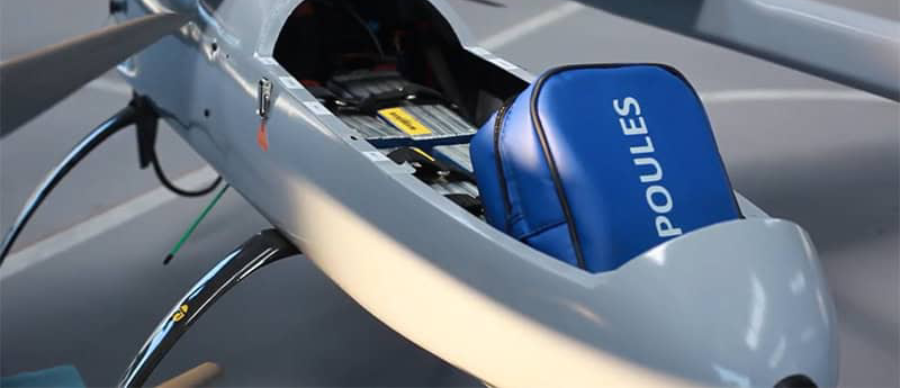
As part of the initiative, Elbit Systems Deutschland is establishing a dedicated research and development organisation in Germany focused specifically on military laser communication systems. The effort will concentrate on unmanned aerial vehicles (UAVs), unmanned aircraft systems (UAS), and terrestrial applications—domains where secure, resilient data transfer is becoming as decisive as sensors or payloads.
The strategic logic is clear. Unmanned systems are generating ever‑larger volumes of data from onboard sensors, while operating in environments saturated with electronic warfare. Laser communication offers a fundamentally different approach: point‑to‑point, high‑capacity links that do not rely on conventional radio emissions.
For Elbit Systems Deutschland, the partnership fits neatly into a broader European strategy. According to CEO Marian Rachow, developing advanced technologies and intellectual property in Germany for use across Europe and within NATO is a cornerstone of the company’s approach. The exclusive collaboration with Cucuyo, he said, reinforces Elbit’s long‑term commitment to investing in German innovation and strengthening its technological presence within Europe’s defence ecosystem.
Cucuyo, meanwhile, brings a clear product vision. The company develops laser‑based communication terminals designed to move beyond experimental prototypes and into standardised products. Its first system, the P‑100 terminal, is intended for smaller UAVs, with power consumption, weight, and data rate optimised for airborne platforms. The company positions laser communication as a solution for data links that exceed the limits of classical radio connections.
Frank Negretti, CEO of Cucuyo, emphasised that the joint developments aim to bring laser communication into a compact, UAV‑compatible format, combining high data capacity with long range. He added that the investments made through the partnership lay the groundwork for making the capability operationally available as early as next year.
Beyond the technical details, the agreement highlights a broader trend in European defence: the tightening integration between established primes and agile start‑ups. Rather than acquiring technology outright, major defence companies are increasingly using exclusive licences and co‑development models to accelerate innovation while retaining sovereign control over critical intellectual property.
Elbit Systems Deutschland contributes deep experience in electro‑optics, radio communications, and system integration—capabilities that position it to transition laser communication from a promising technology into operational, multi‑domain systems.
In an era defined by contested spectra and data‑hungry platforms, the move away from traditional radio may prove decisive. Europe’s next defence advantage may not be louder or stronger—but faster, lighter, and carried on beams of light.