EagleNXT eBee VISION - The Drone Quietly Preparing to Change How the World Sees Agriculture, Security, and Airspace

The drone industry has long promised to transform the way we understand and manage the world from above. Yet only recently have technological maturity, regulatory progress, and artificial intelligence begun to align in a way that could truly unlock that potential. At the center of this shift is EagleNXT and its evolving family of drones — particularly the eBee VISION system.
During an interview on Aviation Champions, EagleNXT CEO Bill Irby described a company that has quietly built one of the most integrated drone technology stacks in the industry. Unlike many drone manufacturers focused solely on hardware, EagleNXT develops a full-stack aerial intelligence platform — from aircraft and sensors to data analysis and mission software.
The company’s roots are unusual. EagleNXT began in 2010 when a farmer started experimenting with drones to improve crop monitoring. What began as a practical agricultural tool evolved into a global aerial intelligence company serving defense, public safety, infrastructure, and environmental monitoring markets.
Today EagleNXT platforms have conducted more than one million flights worldwide, and its sensors are integrated into over 150 different drone models used across research and commercial applications.
But the real technological leap lies in the combination of advanced sensors and autonomous flight capabilities.
From Mapping Drones to Autonomous Intelligence Platforms
EagleNXT’s product portfolio includes three primary drone platforms:
- eBee X – a photogrammetry drone designed for mapping and surveying
- eBee TAC – optimized for tactical surveillance and real-time monitoring
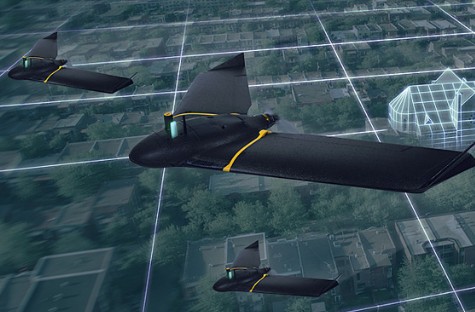
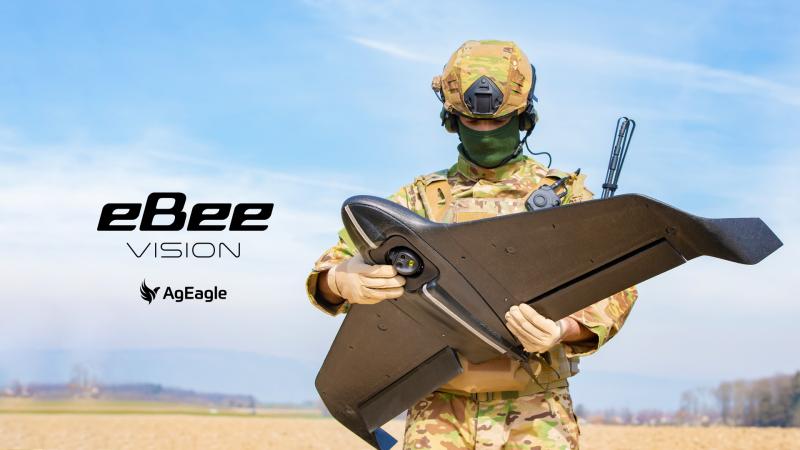
- eBee VISION – a next-generation ISR drone developed in collaboration with the French Army
While early drone applications focused mainly on aerial photography, Irby argues the industry is now entering a new phase: data-driven aerial intelligence.
Using multispectral sensors, drones can detect plant disease, insect infestation, soil moisture variation, and crop stress — long before these problems are visible to the human eye.
This is the foundation of precision agriculture, one of the fastest-growing drone applications.
Instead of treating entire fields uniformly, farmers can now target fertilizer, irrigation, and pesticide use with remarkable accuracy. The result is higher crop yields, reduced environmental impact, and significant cost savings.
But agriculture is only one part of the story.
The Real Breakthrough: BVLOS Flight
Perhaps the most transformative shift in the drone industry will come not from hardware, but from regulation.
For years, drone operators in the United States were required to maintain visual line of sight with their aircraft under FAA Part 107 regulations. This severely limited the economic viability of large-scale drone operations.
Now the FAA is preparing new Part 108 regulations, which will enable Beyond Visual Line of Sight (BVLOS) flights.
If implemented widely, BVLOS rules could open the door to entirely new drone applications:
- long-distance infrastructure inspection
- persistent environmental monitoring
- automated agricultural surveying
- emergency response and disaster assessment
- large-scale security surveillance
For companies like EagleNXT, this regulatory shift represents a major inflection point.
“When BVLOS becomes standard,” Irby explains, “commercial drone operations in the U.S. will expand dramatically.”
AI: The Next Battlefield in Drone Technology
While hardware and regulation are important, Irby identifies artificial intelligence as the next major challenge.
Drones are increasingly capable of collecting enormous amounts of sensor data. The key is turning that data into actionable insights in real time.
AI-driven systems can automatically detect anomalies in crop health, identify security threats, analyze terrain changes, or monitor environmental patterns.
In public safety missions, drones could soon autonomously locate missing persons, track wildfire movement, or assess disaster damage before human responders arrive.
A Global Industry in Consolidation
Despite the rapid innovation, the drone industry remains highly fragmented.
Hundreds of companies currently compete in various segments of the market, but Irby believes the next 3–5 years will bring significant industry consolidation.
As regulatory barriers fall and AI capabilities expand, only companies capable of integrating hardware, sensors, software, and analytics into a cohesive platform will remain competitive.
EagleNXT is positioning itself as one of those companies.
With new production facilities opening in Allen, Texas, alongside existing operations in Switzerland, the company is preparing for a surge in demand across defense and commercial markets.
If the predictions about BVLOS regulation and AI-driven aerial intelligence prove correct, the next generation of drones may not simply capture images from the sky.
They may become one of the most powerful tools humanity has for understanding — and managing — the planet itself.