Air, Ground, and Speed - How Dronivo Is Framing Modern Defence UAS at XPONENTIAL Europe 2026

XPONENTIAL Europe has become a litmus test for where autonomy is headed—not in theory, but in deployable systems. At this year’s edition in Düsseldorf, Dronivo GmbH is making its position clear: modern defence robotics is no longer single‑platform, single‑domain, or single‑purpose.
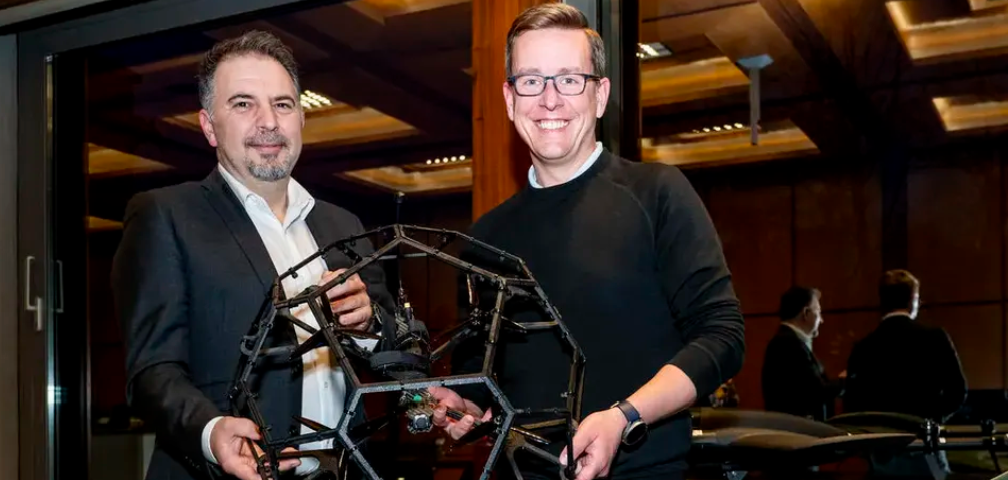
At booth 1C12, the German company is showcasing three very different systems—each representing a distinct operational philosophy: the Jet Hildegard, the Rover Wolfgang, and the Milan 17 Pro ISR.
Together, they form a snapshot of how unmanned systems are evolving from niche tools into integrated capability layers across air and ground.
Jet Hildegard: Speed as a Tactical Advantage
The most visually striking platform on display is Hildegard—a compact, jet‑powered unmanned aircraft that prioritizes speed, agility, and responsiveness. Unlike endurance‑focused ISR platforms, Hildegard reflects a design shift toward rapid, high‑velocity missions where time on target matters more than hours aloft.
Publicly available specifications show a lightweight jet UAV designed to operate at very high speeds, reinforcing a broader industry trend: autonomous systems optimized for tactical windows rather than persistent presence.
In an era where airspace is increasingly contested, speed itself becomes a survivability feature.
Milan 17 Pro ISR: Modularity for Intelligence Missions
If Hildegard represents velocity, the Milan 17 Pro ISR represents flexibility.
Designed as a compact fixed‑wing ISR platform, Milan 17 Pro emphasizes rapid assembly, transportability, and customizable payload integration—key attributes for intelligence, reconnaissance, and surveillance operations across varied environments.
The platform’s value lies less in raw performance metrics and more in operational adaptability. For users, that means a system that can be tailored to mission‑specific sensors and deployed quickly without complex logistics.
In modern ISR operations, modularity is not a luxury—it’s a requirement.
Rover Wolfgang: Autonomy on the Ground
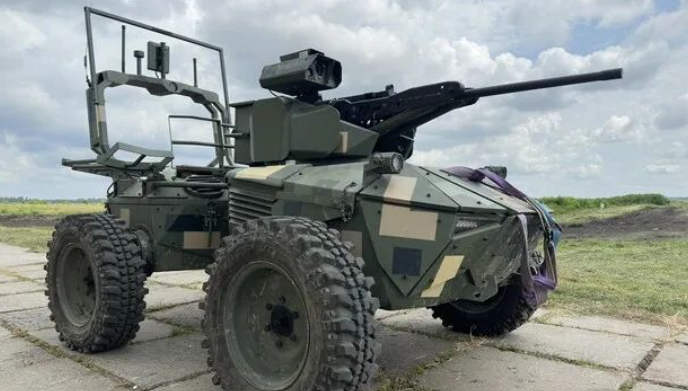
Dronivo’s portfolio isn’t limited to the air. The Rover Wolfgang adds a ground dimension, highlighting the company’s multi‑domain approach.
Designed as an unmanned or remotely operated ground platform, Rover Wolfgang is built for payload handling and mobility in environments where human access may be limited or risky. Its presence at XPONENTIAL Europe underlines a growing recognition that future operations will rely on coordinated air‑and‑ground robotic systems rather than isolated platforms.
This convergence is where autonomy becomes operationally meaningful.
Why XPONENTIAL Europe Matters
XPONENTIAL Europe has positioned itself as a key meeting point for defence, dual‑use, and industrial autonomy—bringing together manufacturers, users, regulators, and investors across the unmanned ecosystem.
For Dronivo, the event is less about a single product launch and more about portfolio storytelling. By presenting systems that span high‑speed aerial platforms, ISR‑focused fixed‑wing UAVs, and unmanned ground vehicles, the company is aligning itself with a defence landscape that values interoperability and mission layering.
The Bigger Picture
What Dronivo is showing in Düsseldorf is not a bet on one technology, but on a direction.
Autonomous systems are no longer defined by whether they fly or drive—but by how well they integrate into broader operational concepts. Speed, modularity, and cross‑domain capability are emerging as the real differentiators.
Visitors to booth 1C12 won’t just see hardware. They’ll see a glimpse of how defence robotics is being re‑architected for a more complex, faster‑moving operational reality.