10,000 Hours Later - How IPET SYSTEMS Is Redefining Endurance in Multirotor Propulsion at Xponential Europe 2026

In the drone industry, endurance is often promised—but rarely proven.
IPET SYSTEMS decided to prove it the hard way.
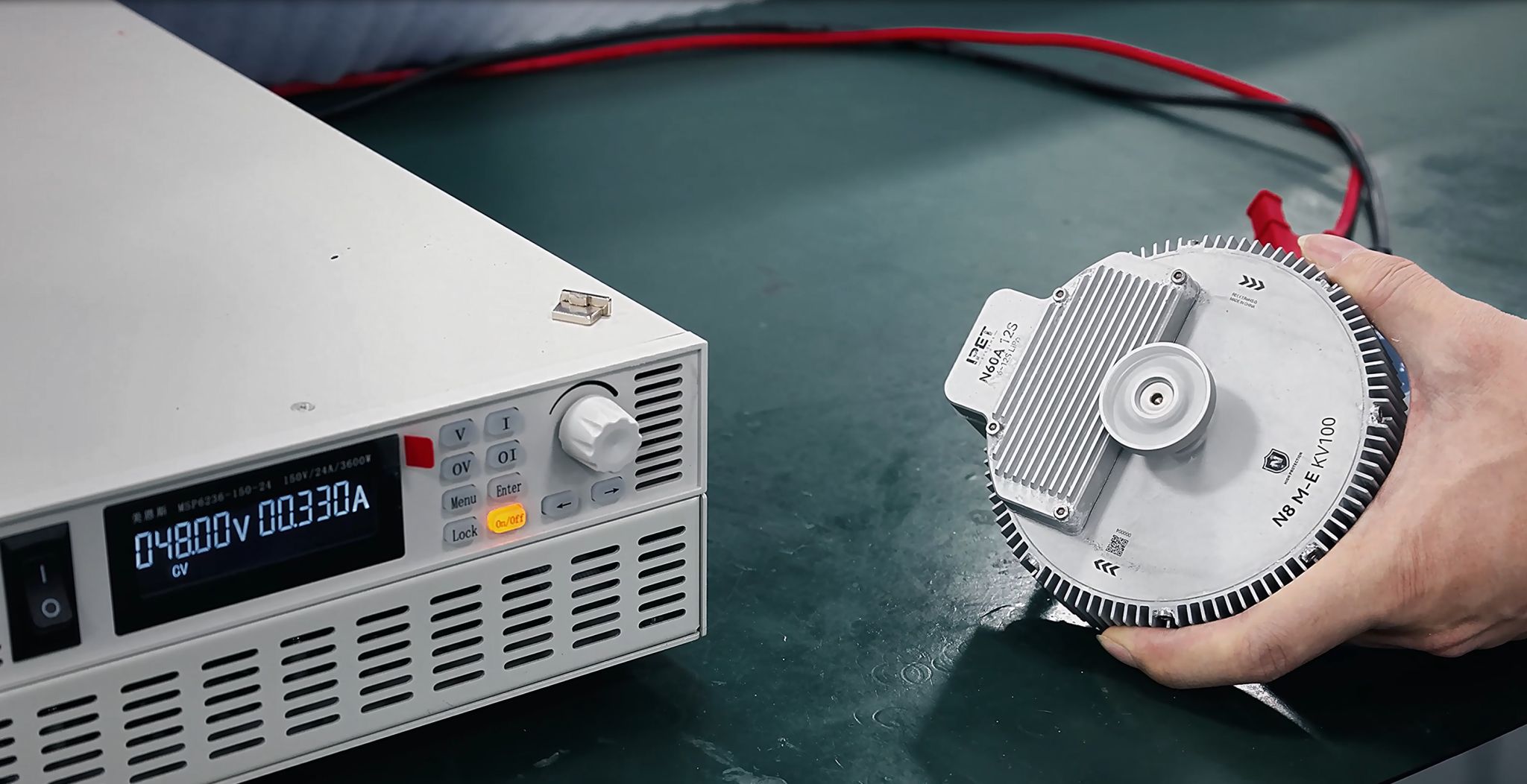
After more than a year of continuous lifespan testing, the company’s i5 integrated power system has successfully completed a 10,000‑hour endurance campaign, concluding on March 11, 2026. The test, which began in November 2024, subjected the system to varying throttle cycles designed to simulate real‑world operational stress until failure thresholds were reached.
This wasn’t a marketing demo. It was a durability trial.
Stress Testing Until the System Stops
The i5 was pushed through long‑duration, variable‑load operation to replicate the unpredictable duty cycles seen in professional multirotor missions—from steady hover to aggressive maneuvering. According to IPET, the goal was simple: find the breaking point.
That focus reflects a broader shift in the multirotor market. As drones move from experimental platforms to industrial tools, lifespan and reliability matter more than peak thrust numbers or short‑term performance gains.
The i5 is designed for 6–8 kg class multirotors and integrates the electronic speed controller (ESC) directly into the motor housing. By eliminating external wiring and reducing thermal and electrical losses, the system aims to maximize both efficiency and operational life.
In other words, fewer parts. Fewer failure points.
Integration as a Design Philosophy
IPET’s approach challenges the traditional modular propulsion stack. Instead of treating the motor, ESC, and propeller as separate components, the company treats propulsion as a single system—engineered, cooled, and monitored as one.
This deep integration is central to the i5’s value proposition: long endurance paired with ultra‑long service life. For fleet operators, that translates into fewer replacements, less downtime, and more predictable maintenance cycles.
It’s a philosophy that increasingly resonates in commercial drone operations, where total cost of ownership often matters more than raw performance specs.
From Proven Endurance to the Next Generation
With the i5 endurance milestone achieved, IPET is now turning its attention to what comes next.
At XPONENTIAL Europe 2026 in Düsseldorf, the company will unveil its new long‑endurance multirotor power system, the i8. Representatives Lidia Wang, Rose Lai, and Ethan Wen will be on site to showcase the platform at booth 1A06.
Like its predecessor, the i8 takes integration further by embedding the ESC directly into the motor—redefining the all‑in‑one propulsion concept. IPET says this architecture enables longer flight times and improved reliability, targeting the rapidly growing multirotor segment where endurance is becoming a competitive differentiator.
Why This Matters for the Market
As multirotor drones expand into logistics, inspection, public safety, and long‑duration surveillance roles, propulsion systems are no longer interchangeable components. They are mission‑critical infrastructure.
IPET’s 10,000‑hour test milestone sends a clear signal: endurance claims must be backed by data, not slides.
XPONENTIAL Europe 2026, a leading European platform for autonomous systems and robotics, provides the right stage for that message. The event brings together manufacturers, operators, regulators, and investors focused on scaling uncrewed systems beyond pilots and prototypes.
For IPET, the timing is deliberate. The company isn’t just launching a new product—it’s making a case for a different way of thinking about drone propulsion.
Because in professional UAV operations, the question is no longer how fast you can fly—but how long you can keep flying.